Flat Roof Leak Repair: Patch, Overlay or Replace? A Dublin Homeowner's Guide
If you've a damp patch on the ceiling under a flat roof extension, it's usually water getting in through a failed seal or water pooling on the roof, and it needs a proper flat roof leak repair. Get it investigated and take photos. If the extension is fairly new, take it up with the builder or contractor who built it: the work may still be covered by their contract or warranty, so ask them to come back and fix it free of charge.
We never advise homeowners to patch their own flat roof. DIY patches usually go on without proper surface preparation and with the cheapest materials, and a patch over a problem area means water starts pooling around its edges and works its way back into the same spot. That's why we recommend a professional repair by roofers who know what they're doing and have seen the problem over and over.
Before you agree to any repair, ask the roofer three things. Do you offer a warranty on your work? Are you happy to be paid when the job is finished, rather than money upfront? And what will you do about the cause, not just the leak? If water is pooling, fixing where it gets in isn't enough on its own: there needs to be a plan for the pooling or the fall of the roof, so they're not back in a couple of months repairing the same problem in another spot.
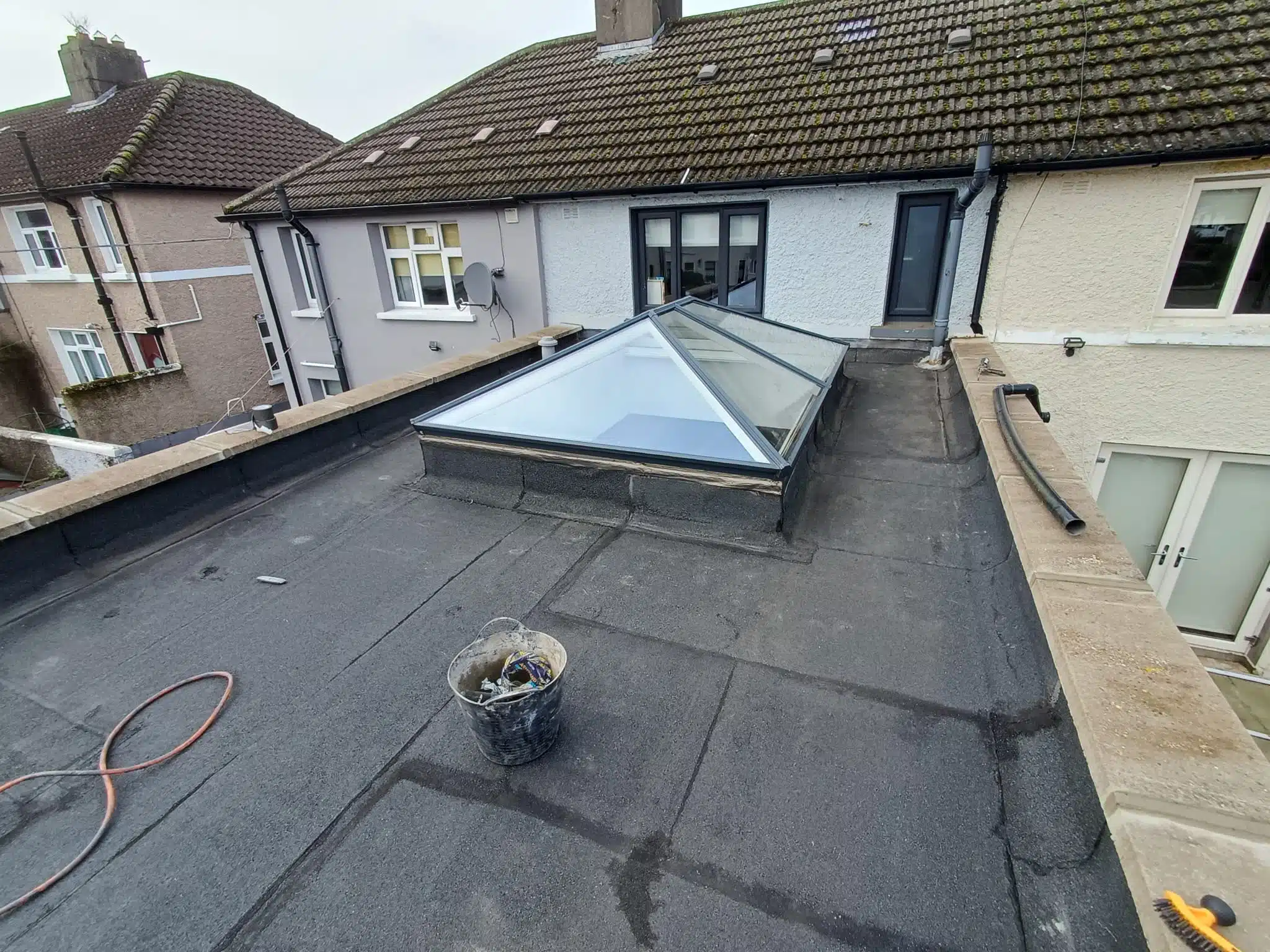
A finished flat roof extension by our team in Dublin.
This guide covers the warning signs, why flat roofs leak in heavy rain, how each type of flat roof is repaired (felt, EPDM rubber and GRP fibreglass), and what repairs and replacements cost in Ireland. If you're choosing a material for a new roof, our guide to EPDM vs felt vs fibreglass covers that side.
Key Takeaways
- Most flat roof leaks start at one weak point, usually a seam, a flashing or an upstand, and the stain can be a metre from where the water gets in.
- There are three fixes: a patch for one defect on a sound roof, an overlay for a tired but dry roof, and a full replacement when the deck or insulation is wet.
- Water still sitting on the roof 48 hours after rain is ponding, and it's worth acting on.
- Felt, EPDM and GRP are each repaired with their own material, so the repair bonds and lasts.
- Don't go on the roof or use a torch yourself: put out buckets, take photos and call a roofer.
Flat roof leak repair options at a glance
| Option | What's done | When it makes sense | When it doesn't |
|---|---|---|---|
| Patch repair | The damaged area is cut out or cleaned, dried, and new material is bonded over it, well past the edges of the damage | One split, blister or failed seam on a roof that's otherwise sound, dry and well within its life | The timber deck or insulation underneath is wet, or the roof leaks in more than one place |
| Overlay | A new waterproof layer goes over the old roof, with the upstands and edges stripped and redone | An ageing roof that's still dry and solid, where stripping it off adds cost without adding anything | Spongy areas, trapped water, or a structure that can't take the extra weight |
| Full replacement | The roof is stripped back to the deck, rotten boards are replaced, insulation goes in and a new system is laid | An old roof, repeat leaks, wet insulation or a rotten deck | A young roof with one small defect |
Signs your flat roof is leaking or failing
- Ponding water: puddles still sitting on the roof 48 hours after rain. A little standing water that drains away is normal; water that stays means the fall has sagged or an outlet is blocked.
- Blistering or bubbling: trapped moisture or air under felt expands in the sun and lifts the surface. Blisters eventually crack open.
- Cracks and splits: old felt dries out and cracks, and seams on rubber and fibreglass roofs can open up.
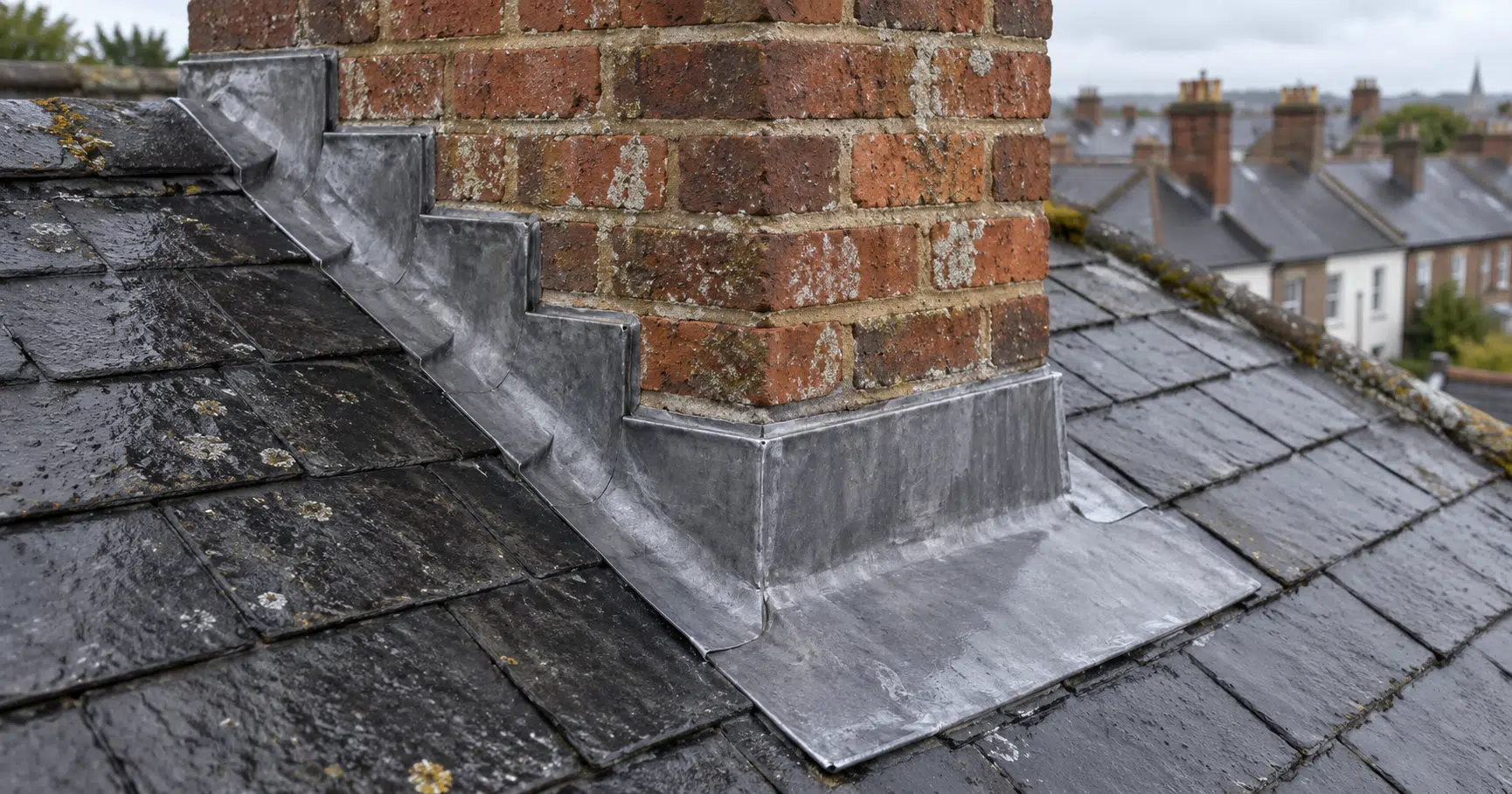
- Failed flashings and upstands: where the flat roof meets a wall, a parapet or a skylight. This is where most leaks start.
- Water stains on the ceiling, a musty smell, or paint bubbling inside the room below.
- Moss, leaves and blocked drainage outlets, which hold water on the roof.
- A soft or spongy feel underfoot means the deck is wet. Roofers find this during an inspection; please don't walk on the roof to check.
Why flat roofs leak in heavy rain
Flat roofs aren't completely flat. They're built with a slight fall so water runs to a gutter or an outlet. When the deck sags, or leaves block the outlet, water sits on the roof instead. Standing water finds any weak seam, crack or tired flashing, wind-driven rain pushes it under the edges, and storm damage lifts trims and tears the membrane.
That's why flat roof leaks in heavy rain can appear out of nowhere after months of dry weather. It's also why flat roof leak repair starts with finding where water gets in, not where it drips out. Water travels along the deck and through the insulation, so the leak can be a metre or more from the stain. Our guide to preventing leaks on flat roofs covers the maintenance side.
Patch, overlay or replace: how to decide
We look at four things before recommending any repair.
- How old is the roof? Older felt roofs often lasted only 10 to 15 years, while modern certified torch-on systems are rated for 25 years or more. Certified GRP systems are rated for more than 15 years, and EPDM makers claim 50 years or more. A roof near the end of its life is rarely worth patching.
- How much of it is damaged? One defect suits a patch. Damage in several places points to an overlay or a new roof.
- Is the deck or insulation wet? A patch only works when what's underneath is dry and sound. Spongy or failing sections have to be stripped out and replaced, not covered over.
- Has it been patched before? Repeat leaks in different spots mean the whole covering is worn out, not just one bit of it.
Whatever the fix, the details around the edges (upstands, flashings and outlets) are where most leaks begin, so a good repair always checks them too.
How each type of flat roof is repaired
Felt roof repair (torch-on and older felt)
Most flat roofs on Dublin extensions are felt. Patching a felt roof means cutting out the blister or damaged section, letting the area dry, then bonding a new layer of torch-on felt over it so it overlaps the sound roof all round. If the old felt is brittle and cracking everywhere, patches won't hold for long, and an overlay or a new roof is the better spend. Torch-on felt is laid with a gas torch, so it's a job for trained roofers only. See our torch-on felt service for more.

Torch-on felt going down on a flat roof: a job for trained roofers only.
EPDM rubber: membrane roof repair
EPDM is a single rubber membrane, and most of its leaks are at seams, edges and outlets rather than in the middle of the sheet. Membrane roof repair means cleaning and priming the rubber, then bonding a patch or cover tape over the cut, puncture or open seam. A big plus of EPDM is that it can still be repaired many years after it's laid.
GRP: fibreglass roof repair
For fibreglass roof repair, cracks are ground back and re-laminated with resin and glass matting, then given a fresh topcoat. Bigger damage is repaired by laying a new sheet of GRP over the area. The new topcoat may not match the old colour exactly, which is worth knowing if the roof is overlooked.
When a new flat roof is the better buy
A full replacement costs more upfront, but repeat call-outs and water damage inside add up fast. A new roof gets you a sound deck, fresh insulation and a new guarantee, instead of hoping the next patch holds.
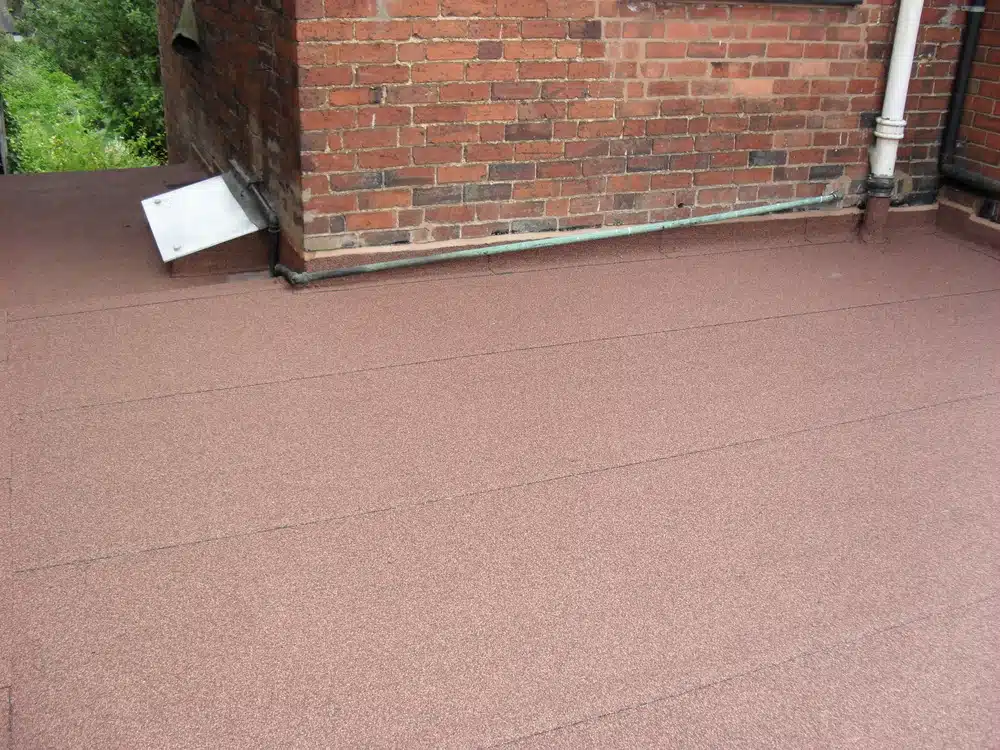
A new felt flat roof with the upstand dressed against the chimney.
It's also the cheapest moment to improve insulation. Ireland's energy rules for homes (Technical Guidance Document L) give a target of 0.25 W/m²K for flat roofs in alteration work. Whether that applies to your job depends on the work being done, so ask your roofer, but when a roof is stripped back to the deck anyway, adding insulation costs far less than doing it later. Our flat roof repair in Dublin page explains how we replace flat roofs.
What does fixing a leaking flat roof cost in Ireland?
Published prices from Irish roofers in 2025 and 2026 give a rough guide:
| Job | Typical published range |
|---|---|
| Small patch repair (one blister, split or seam) | About €150 to €400 |
| Larger repair (several defects, a section of roof) | About €400 to €1,500 |
| Replacing a small flat roof, up to about 20 m² | About €1,200 to €2,500 |
| Larger flat roofs | Several thousand euro more, depending on size |
These are averages from roofers' own websites, not a quote. The cost of flat roof replacement depends on the size, the access, the material, and whether the deck underneath needs replacing. The only real figure is a written quote after someone has looked at your roof, and our quotes are free.
Can I repair a flat roof myself?
You can keep the damage down while you wait for a roofer:
- Inside: put out buckets, move furniture and belongings, and keep water away from light fittings and sockets.
- Photos: take photos of the stain and any damage, with dates, in case you need them for insurance.
- Stay off the roof, especially in wet or windy weather. Ireland's Health and Safety Authority notes that most falls from flat roofs happen at edges, openings and fragile areas.
Leave torch-on work to trained roofers. Industry safety guidance says gas torches should only be used by trained operatives working under a permit, and flame-free products are used wherever there's a fire risk. Liquid roofing coatings and repair tapes sold in DIY shops can buy time on a small crack, but they won't fix wet insulation or a rotten deck underneath.
Leaking flat roof FAQs
How much does it cost to repair a flat roof in Ireland?
Irish roofers publish prices of about €150 to €400 for a small patch repair and €400 to €1,500 for larger repairs. Replacing a small flat roof starts at around €1,200 to €2,500. Your price depends on size, access and the condition of the deck, so get a written quote.
What is the best material to repair a flat roof?
Usually the same material the roof is made of: felt on felt, EPDM on EPDM and GRP on GRP, because different materials don't always bond to each other. Liquid roofing coatings are useful on awkward details or as a temporary fix.
Is it normal to have standing water on a flat roof?
A little water that drains away within a day or two is normal. Water still sitting there 48 hours after rain is ponding, and it shortens the life of the roof because it keeps pressure on the seams.
Can you repair a flat roof in the rain?
Only a temporary repair. Proper repairs need a dry surface, because adhesives and torch-on felt don't bond to wet material. In an emergency we can make the roof safe and come back to finish the repair in dry weather.
How long should a flat roof last?
A well-laid flat roof should last 20 to 30 years, and some modern systems are rated for longer. Older felt roofs often failed after 10 to 15 years, which is why many Dublin extensions built in the 2000s are due for attention now.
How often should a flat roof be inspected?
At least once a year, and after any big storm. Keeping outlets and gutters clear between inspections stops most ponding problems before they start. Book a roof inspection if yours hasn't been looked at in a while.
Get your flat roof checked
If your flat roof is leaking, or you're not sure whether to patch it or replace it, we'll take a look, show you photos of what we find and give you a free, written quote. See our flat roof repair in Dublin page, read about flat roof fixes in South Dublin, or contact us on 01 699 1499. For a leak that can't wait, our emergency roof repairs cover North and South Dublin around the clock.
Get a free flat roof quote