EPDM vs Felt vs Fibreglass: Which Flat Roof Is Best for Irish Weather?
Flat roofs are all over Irish homes, on extensions, dormers, porches, garages and outbuildings, even when the main house is pitched. And the moment one starts to leak or reaches the end of its life, the first question is nearly always the same: which material should we use to replace it? In Ireland you'll be offered three, felt, EPDM rubber and fibreglass, and they are not equal. They differ in how long they last, what they cost, how they cope with our weather and what they're actually best suited to.
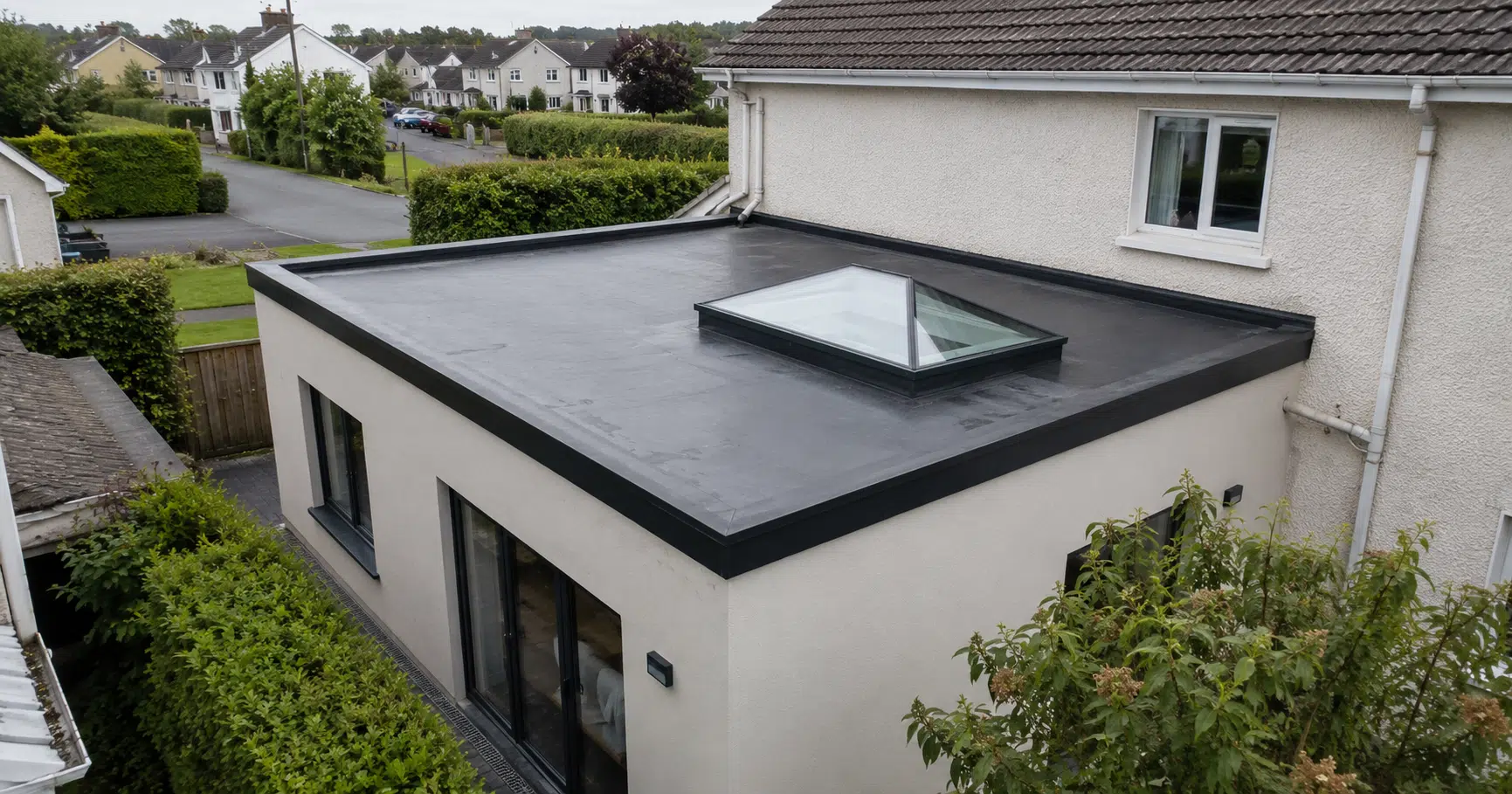
On a flat roof the covering does almost all the waterproofing, so the material really matters.
There's no single "best" flat roof, only the best one for your situation. A garage roof and a walk-out balcony have very different needs, and the material that's perfect for one is the wrong choice for the other. Get the match right and a good flat roof will outlast the money you'd spend fixing a cheap one twice.
Key Takeaways
- Felt is cheapest upfront but shortest lasting, typically around 15 to 20 years for modern torch-on felt.
- EPDM rubber lasts the longest of the three, often 30 to 50 years, with few seams to fail.
- Fibreglass (GRP) gives a hard, seamless finish that can be walked on, which makes it ideal for balconies and terraces.
- Irish weather rewards flexibility and good drainage, which is where EPDM tends to shine and aged felt tends to fail.
- The right choice depends on the roof's use, size and budget, not just the headline price.
Why Flat Roofs Are So Common on Irish Homes
Most Irish houses have a pitched main roof, but flat roofs turn up everywhere, over kitchen extensions, single-storey builds, dormer conversions, porches, bay windows and garages. They're cheaper and quicker to build over these spaces and they make good use of the area above. The catch is that a flat roof has to work harder than a pitched one. Water doesn't run off nearly as fast, so the covering itself is doing almost all of the waterproofing, which is exactly why the material you choose matters so much in a climate as wet as ours.
The Three Flat Roof Systems Explained
Felt (Torch-On and Built-Up)
Felt is the traditional flat roof covering and the one most people picture. Modern felt roofs are usually torch-on, where layers of bitumen-based felt are bonded together and to the roof deck using a gas torch, a big step up from the older pour-and-roll method. Felt is the cheapest option upfront and repairs are simple and inexpensive. The trade-off is lifespan: even good torch-on felt tends to last around 15 to 20 years, and it can blister, crack or lift at the seams as it ages and bakes in the sun. It's a sound, budget-friendly choice for garages, sheds and outbuildings, and our torch-on felt service covers exactly this kind of work.
EPDM (Rubber Roofing)
EPDM is a synthetic rubber membrane, usually laid as a single large sheet. On many domestic roofs that means few or no seams at all, and seams are where flat roofs most often fail, so that's a genuine advantage. Rubber is naturally flexible, so it copes well with the constant expansion and contraction that our temperature swings cause, and it shrugs off UV and frost. It's very low maintenance and routinely lasts 30 to 50 years. The main downsides are that it's black and fairly utilitarian to look at, and a sharp impact can puncture it, though punctures are quick and cheap to patch.
Fibreglass (GRP)
Fibreglass, or GRP (glass reinforced plastic), is built up from layers of fibreglass matting and resin that cure into one solid, seamless surface. Because there are no joints at all, there's nowhere obvious for water to get in, and the finished surface is hard enough to walk on, which makes it the go-to for balconies, roof terraces and any flat roof that sees foot traffic. It gives a very neat, almost moulded finish and lasts around 25 to 30 years. The catches: it's the priciest of the three, it needs skilled installation, and crucially it has to be laid in dry conditions so the resin can cure, which isn't always easy to arrange in Ireland.
EPDM vs Felt vs Fibreglass: Side by Side
| Felt (torch-on) | EPDM (rubber) | Fibreglass (GRP) | |
|---|---|---|---|
| Typical lifespan | 15–20 years | 30–50 years | 25–30 years |
| Upfront cost | Lowest | Mid-range | Highest |
| Seams & joints | Multiple (common weak point) | Few or none on smaller roofs | Completely seamless |
| Foot traffic | Light only | Light to moderate | Good, walkable |
| Flexibility | Goes brittle with age | Excellent, stays flexible | Rigid, hard surface |
| Installation | Torch-applied, fairly forgiving | Bonded down, forgiving | Needs dry weather to cure |
| Best suited to | Garages, sheds, budget jobs | Extensions, long-term low upkeep | Balconies, terraces, walkways |
The short version: felt wins on price, EPDM wins on lifespan and low maintenance, and fibreglass wins on finish and walkability. Where your priorities sit is what decides it.
How Each Material Copes with Irish Weather
This is where the differences really show, because our weather is genuinely tough on flat roofs. We get a lot of rain spread across a lot of days, so drainage and standing water matter a great deal, and you can see the long-run pattern in Met Éireann's climate data. Here's how the three compare when the weather turns:
- Rain and ponding. Every flat roof needs a slight fall to drain. Aged felt copes with standing water worst, while EPDM and GRP handle it better, though no flat roof likes sitting water for long.
- Freeze-thaw and temperature swings. EPDM's flexibility is a real advantage here, as it stretches and contracts without cracking. Old felt goes brittle and splits, and rigid GRP can be stressed by thermal movement if it isn't detailed well.
- UV and sun. Both EPDM and fibreglass resist UV well over decades, whereas felt degrades noticeably faster under the sun.
- Wind. All three are fine when properly fixed and bonded. On a flat roof, poor installation is the real enemy, not the material itself.
It's also worth thinking about insulation while the roof is open. A modern flat roof is usually built as a "warm deck", with insulation above the structure, which improves energy efficiency, and SEAI's guidance on insulation is a useful starting point if you're weighing that up.
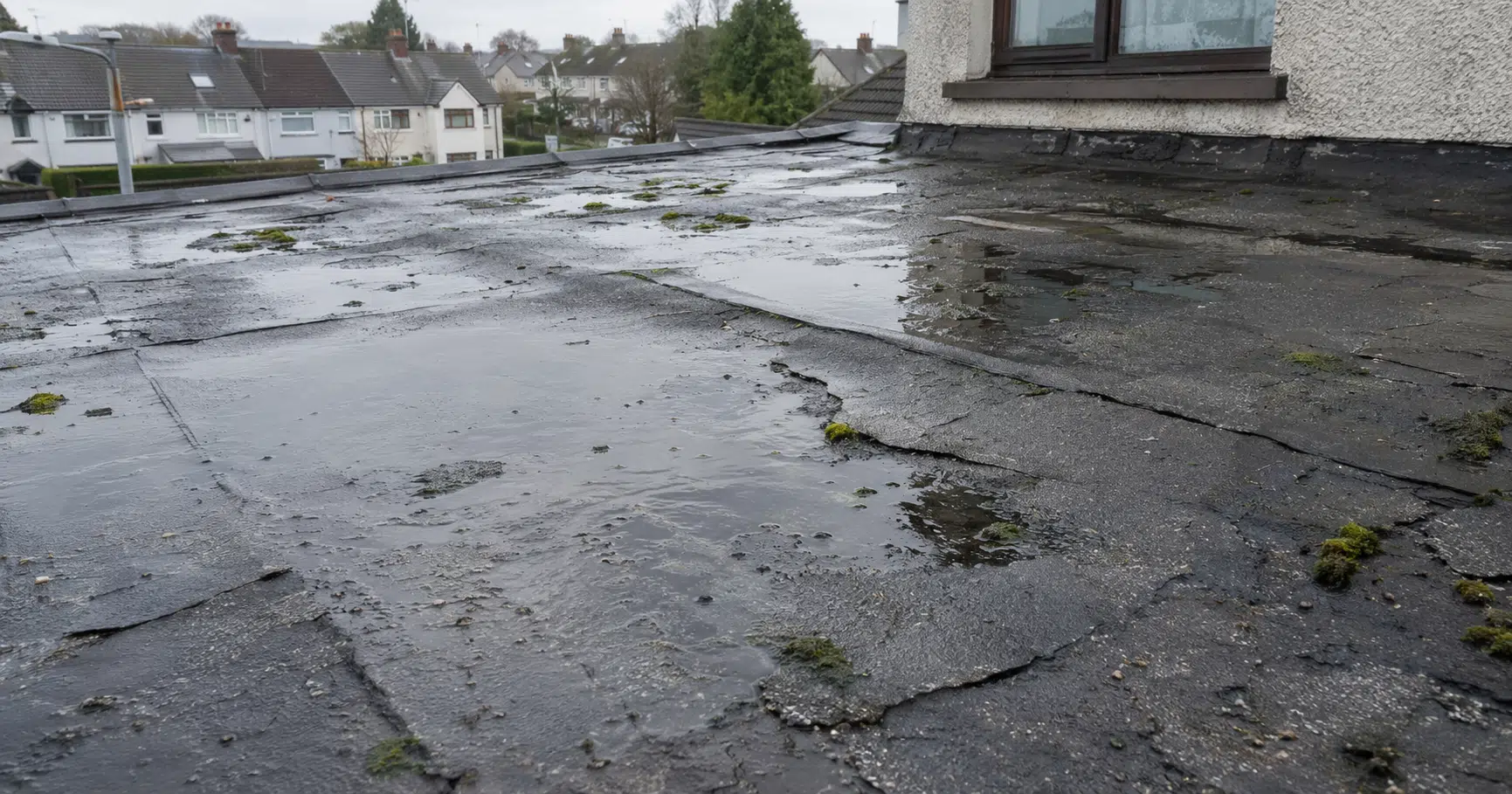
Ponding, cracks and lifting seams are classic signs an aged felt roof is on its way out.
So, Which Flat Roof Is Best?
The honest answer is that it depends on the roof. But here's how we'd steer most Dublin homeowners:
- Choose EPDM if you want the longest life and the least maintenance and you don't mind a black finish. It's the best all-rounder for extensions and larger flat roofs.
- Choose fibreglass if the roof will be walked on or you want a hard, seamless, tidy finish. It's ideal for balconies and terraces, provided you're happy to pay a bit more.
- Choose felt if budget is the priority, or it's a garage, shed or outbuilding where a 15 to 20 year life is perfectly fine.
Signs Your Flat Roof Needs Replacing
Whatever the material, these are the signs it's time to take a proper look:
- Pooling water that still sits there days after the rain has stopped.
- Cracks, splits, blisters or bubbling across the surface.
- Lifting or open seams, a classic felt failure and a direct route in for water.
- Damp patches, staining or drips on the ceiling in the room below.
- Moss and a generally tired, worn surface that no longer sheds water cleanly.
If you're seeing any of these, a quick professional roof inspection will tell you whether a repair will do or whether it's time to replace, and which material makes the most sense for your roof.
Thinking about a new flat roof, or not sure yours will last another winter?
Whether it's felt, EPDM or fibreglass, our flat roofing team will assess what you have and recommend the right fit, with a clear, no-obligation price.
Get a Free QuoteFrequently Asked Questions
Which flat roof material lasts the longest?
EPDM rubber is the longest lasting of the three, commonly 30 to 50 years when it's well installed. Fibreglass typically lasts around 25 to 30 years, and felt around 15 to 20. Installation quality matters as much as the material, though, a well-fitted felt roof can outlast a poorly fitted rubber one.
Is EPDM or fibreglass better for a flat roof?
It depends on the roof. EPDM lasts longer, flexes with temperature changes and needs very little maintenance, which makes it great for extensions and larger roofs. Fibreglass gives a hard, completely seamless finish you can walk on, so it's the better pick for balconies, terraces or anywhere with foot traffic, though it usually costs more.
Can you put a new flat roof over an old one?
Sometimes, but it's usually a false economy. Laying a new covering over an old, failing one can trap moisture and hide problems in the deck below, and it rarely lasts as well as starting fresh. The right answer depends on the condition of what's underneath, which is something a roofer should assess before deciding.
Why does my flat roof keep leaking?
The usual culprits are failed seams, standing water that has found a weak point, or an aged felt surface that has cracked or blistered. Leaks around the edges often come down to flashing rather than the roof covering itself. Because water travels before it drips, the leak inside is rarely directly below the actual fault, which is why these are worth having traced properly.
How much does a new flat roof cost in Ireland?
It depends on the size of the roof, the material you choose, and how easy the roof is to access. Because every job is different, the only accurate way to know is to have it measured and assessed. We're happy to take a look and give you a clear, no-obligation quote.