Asbestos Roof Tiles in Ireland: How to Identify Them and What to Do Next
If your house, garage or extension was built before the year 2000, there's a real chance something on the roof contains asbestos. For decades, asbestos cement was one of the most common roofing materials in Ireland, used in artificial slates, corrugated sheets on garages and sheds, soffits, gutters and flue pipes. Plenty of Dublin homeowners only find out when a roofer, a surveyor or a solar installer mentions it. The first thing to know is this: an asbestos roof in good condition is not an emergency. The second is that it needs to be treated with respect, and never disturbed without knowing what you're dealing with.
Corrugated fibre cement roofs on older garages and sheds are among the most common places to find asbestos.
This guide explains where asbestos roof tiles and sheets are found, how to tell whether yours might contain asbestos, what's genuinely risky and what isn't, and what your options are if testing confirms it.
Key Takeaways
- Asbestos was commonly used in Irish building materials until 1 January 2000, and it can be present in any building built or refurbished before 2004.
- You can't confirm asbestos by looking at it. Asbestos-free fibre cement looks almost identical, so only a lab test gives a definite answer.
- Undisturbed asbestos in good condition is generally low risk. The danger comes when fibres are released by cutting, drilling, breaking or power washing.
- Homeowners should never remove asbestos themselves. Removal must be done by a specialist contractor, and the waste handled as hazardous waste.
- Fibre cement roofs are fragile, so never walk or stand on them, whether or not they contain asbestos.
Why Asbestos Ended Up on Irish Roofs
Asbestos cement was cheap, light, strong, fire resistant and didn't rot, which made it ideal for roofing. Small amounts of asbestos fibre were bound into cement and pressed into thin slates, wavy corrugated sheets, boards and pipes. It went onto homes, garages, farm buildings and extensions across the country right through the 1960s, 70s, 80s and 90s. According to Citizens Information, asbestos was commonly used in building materials until 1 January 2000, and it can be found in any building that was built or refurbished before 2004. Asbestos-containing products can no longer be sold in Ireland, but a huge number of those older roofs are still in place.
Where Asbestos Is Found on a Roof
When people think of an asbestos roof, they usually picture corrugated sheets on a shed. In reality, it can turn up in several places on a typical older Irish house.
- Fibre cement slates. Thin, flat artificial slates used on many houses as a cheaper alternative to natural slate.
- Corrugated asbestos roof sheets. The wavy grey sheets on garages, sheds, lean-tos, carports and farm buildings.
- Soffits and fascias. Flat asbestos cement boards were often used under the eaves before uPVC became standard.
- Gutters and downpipes. Some older properties still have heavy grey asbestos cement rainwater goods.
- Flue pipes and vent cowls. Grey cement flues coming through the roof from old boilers and heaters.
- Some older bitumen roofing felts on flat roofs and outbuildings also contained asbestos.
How to Tell If You Have Asbestos Roof Tiles
Start With the Age of the Building
The single biggest clue is age. If the roof was installed or refurbished before 2000, and especially if it went on in the 1970s, 80s or 90s, asbestos is a real possibility. If the roof is newer than that, it's very unlikely.
What Fibre Cement Slates Look Like
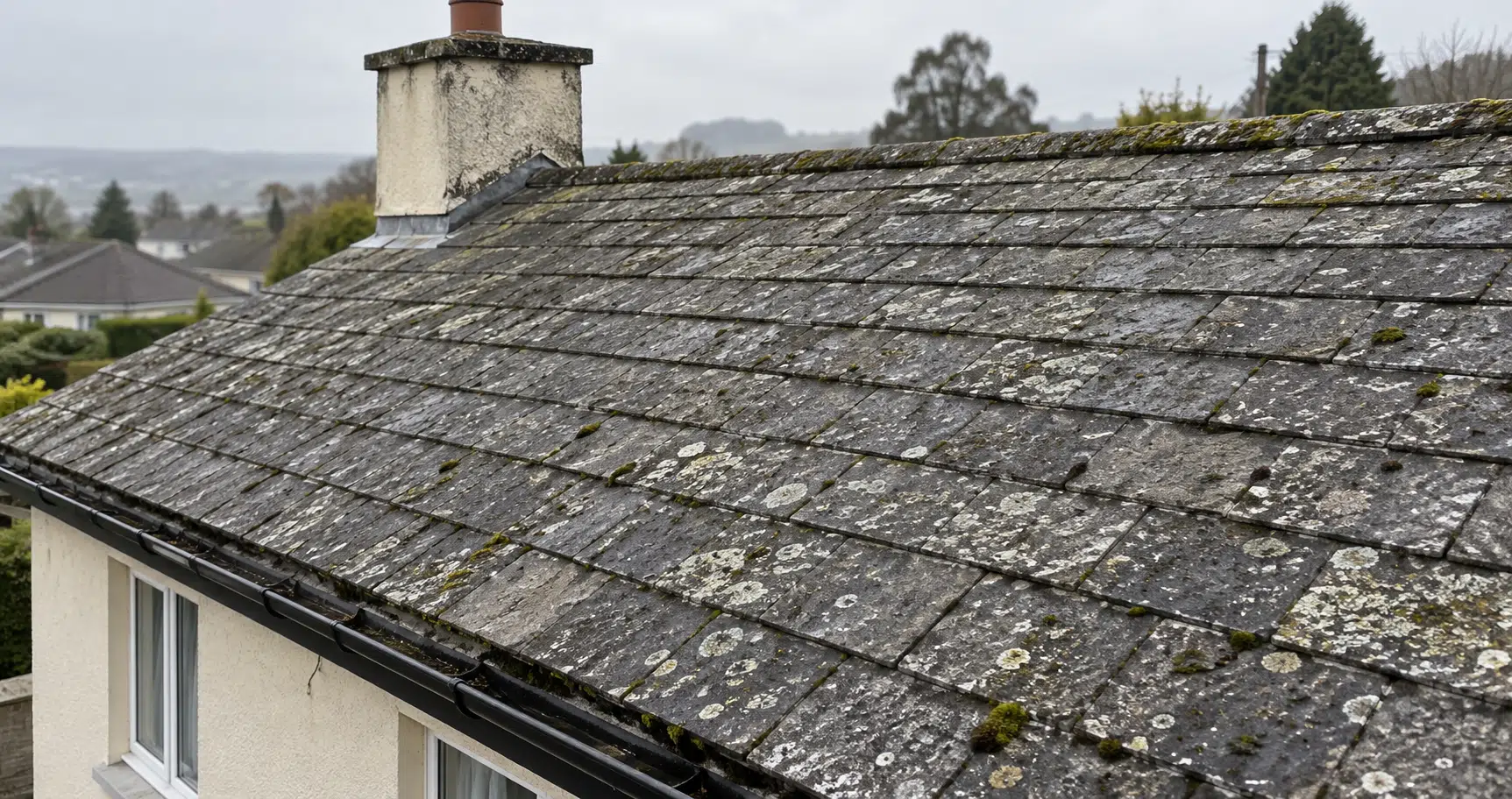
Older asbestos roof tiles and slates tend to be thin, flat and very uniform, usually a dull grey or blue-grey, with perfectly straight edges and no natural texture. They're often held at the bottom edge with small metal disc rivets, and older ones are frequently covered in moss or lichen. Natural slate, by comparison, has slightly uneven edges and a layered, stone-like texture.
Why You Can't Be Sure by Eye
Here's the catch: modern asbestos-free fibre cement looks almost exactly the same. The only way to know for certain is to have a sample tested by a competent asbestos surveyor, who takes it safely and sends it to an accredited lab. Please don't break off a piece to check it yourself, as that's exactly the kind of disturbance that releases fibres.
Is an Asbestos Roof Dangerous?
The honest answer is: it depends almost entirely on its condition and whether it's disturbed. In asbestos cement, the fibres are locked into the cement. As long as the material is intact and left alone, very few fibres are released, which is why Citizens Information notes that asbestos in good condition, with no disturbance or damage, should not cause harm.
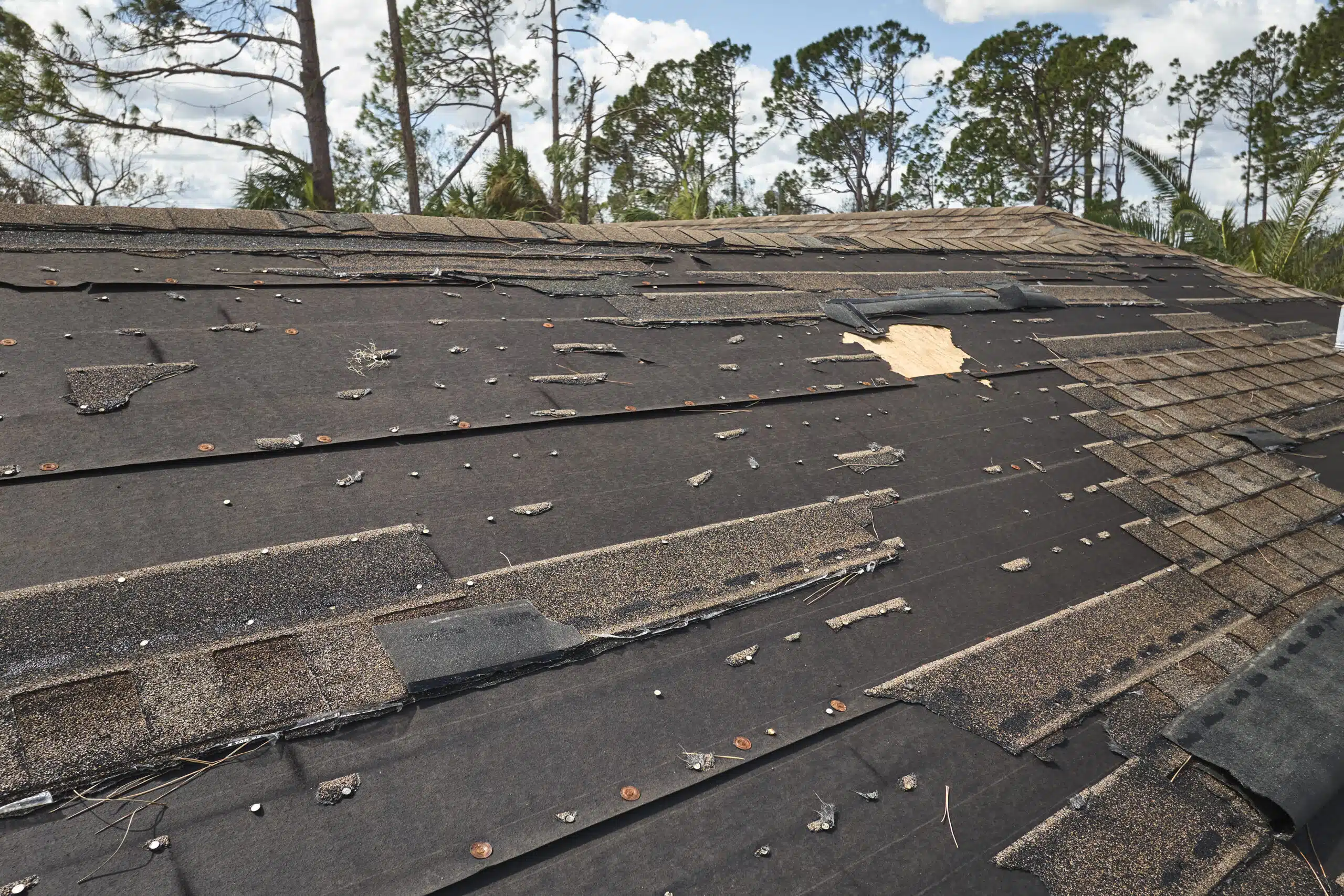
The risk comes when the material breaks down or is worked on. Cutting, drilling, sanding, snapping or power washing asbestos sheets releases fibres into the air, and heavily weathered, crumbling sheets can shed fibres on their own. Breathing those fibres in is linked to serious lung diseases, including asbestosis, lung cancer and mesothelioma, which can take decades to develop. The Health and Safety Authority's introduction to asbestos explains the hazards in more detail.
What Not to Do With a Suspected Asbestos Roof
- Don't power wash it. High pressure strips the surface and sends fibres into the air. Even on non-asbestos roofs, power washing does damage, as we explain in our guide to getting rid of moss on your roof.
- Don't drill, cut or sand it, including to fit a satellite dish, solar brackets or a vent.
- Don't walk or stand on it. Fibre cement sheets are fragile, and falls through them cause serious injuries every year.
- Don't break it up or put it in a skip or household bin. Asbestos waste is hazardous and has strict disposal rules.
The fragile roof point deserves repeating. People regularly fall through garage and shed roofs while trying to clear gutters or fix a leak, and the HSA's guidance on working at height treats fragile roofs as a serious hazard for good reason.

Asbestos roof sheets should come off whole, wetted down and wrapped, never broken up.
Your Options If the Roof Contains Asbestos
A positive test doesn't automatically mean the roof has to come off. Depending on its condition and your plans, there are four main routes.
| Option | What it involves | When it suits |
|---|---|---|
| Leave and monitor | Leave the roof undisturbed and check its condition from the ground periodically. | Sound, undamaged roofs with no work planned. |
| Encapsulate | A specialist sealant coating is applied to lock the surface in place. | Roofs in fair condition you want to keep for now. |
| Over-roof | A new roof covering is fixed over the existing sheets without removing them. | Some outbuildings, where the structure can carry the extra weight. |
| Remove and replace | A specialist contractor removes the asbestos and a new roof is fitted. | Damaged roofs, or before renovation, solar or an extension. |
The right choice should come from a proper risk assessment by a specialist, not a guess. Removal is often the cleanest long-term answer, especially if you're planning work on the house, selling, or the roof is already damaged.
What Asbestos Roof Removal Involves
Asbestos removal isn't a DIY job, and Citizens Information is clear that householders should never handle, disturb or remove asbestos themselves. A properly managed asbestos roof removal generally follows these steps:
- Survey and testing to confirm what's there and plan the work.
- Controlled removal by trained operatives in protective equipment, with sheets wetted down and lowered whole rather than broken.
- Wrapping and labelling of all asbestos waste on site.
- Licensed disposal, using waste collectors with the correct permits to take it to an authorised facility. The EPA's best practice guidance on handling asbestos sets out how it should be done.
- A new roof fitted once the asbestos is gone.
Our asbestos roof removal service handles the whole process for homes, garages and outbuildings across Dublin, and we can fit the replacement roof straight afterwards with our new roof installation team, so you're dealing with one company from start to finish.
Planning Work, Selling or Going Solar?
If you're planning an extension, an attic conversion, solar panels or any work that touches an older roof, get it tested before work starts. A buyer's surveyor will very likely flag a suspected asbestos roof too, so knowing where you stand and having paperwork for any removal makes a sale smoother. If you're not sure what's on your roof, a roof inspection is a sensible first step to identify likely asbestos materials and what to do about them.
Think your roof might contain asbestos?
We'll take a look, explain your options honestly, and if removal is the right call, handle it safely from start to finish, with a clear, no-obligation price.
Get a Free QuoteFrequently Asked Questions
How do I know if my roof tiles contain asbestos?
Age is the biggest clue. If the roof went on or was refurbished before 2000, asbestos is a real possibility, especially with thin, uniform grey fibre cement slates or corrugated sheets. But asbestos-free fibre cement looks almost identical, so the only way to know for certain is to have a sample taken by a competent surveyor and tested in a lab.
Is it safe to live in a house with an asbestos roof?
Generally yes, if the roof is in good condition and left undisturbed. The fibres in asbestos cement are bound into the material, so the risk is low unless it's damaged, crumbling, or worked on by cutting, drilling or power washing. If the roof is deteriorating or you're planning work that will disturb it, get it assessed by a specialist.
Can I remove asbestos roof sheets myself?
No. Citizens Information advises that householders should never handle, disturb or remove asbestos themselves. Removal must be carried out by a specialist contractor, and asbestos waste is hazardous, with strict rules on how it's wrapped, labelled, transported and disposed of. It can't go in a skip or household bin.
Can I clean moss off an asbestos roof?
Not by power washing or scraping it yourself, as both can release fibres. If moss on an asbestos roof is causing problems, get advice from a specialist first. In many cases the better long-term solution is encapsulation or replacing the roof altogether.
How much does asbestos roof removal cost in Ireland?
It depends on the size and type of roof, how easy it is to access, and whether a new roof is being fitted afterwards. A garage roof is a very different job from a full house roof. The only accurate way to know is to have it assessed, and we're happy to take a look and give you a clear, no-obligation quote.