Chimney Flashing Explained: Why It Matters for Leak Prevention
The roof tiles look fine. The chimney is still standing straight. Yet every spell of heavy rain leaves a damp patch beside the chimney breast. The problem may be hiding in the narrow strip of metal where the two meet.
Chimney flashing protects the junction between the chimney and the roof, directing rainwater back onto the roof covering and away from the opening around the stack. If it splits, lifts or loses its connection to the masonry, water can get behind it even when the surrounding tiles are in good condition.
This guide explains what flashing does, why it fails, which warning signs deserve attention and how repair compares with replacement. If you already have a leak, our chimney flashing repair service in Dublin can assess the source before recommending a fix.
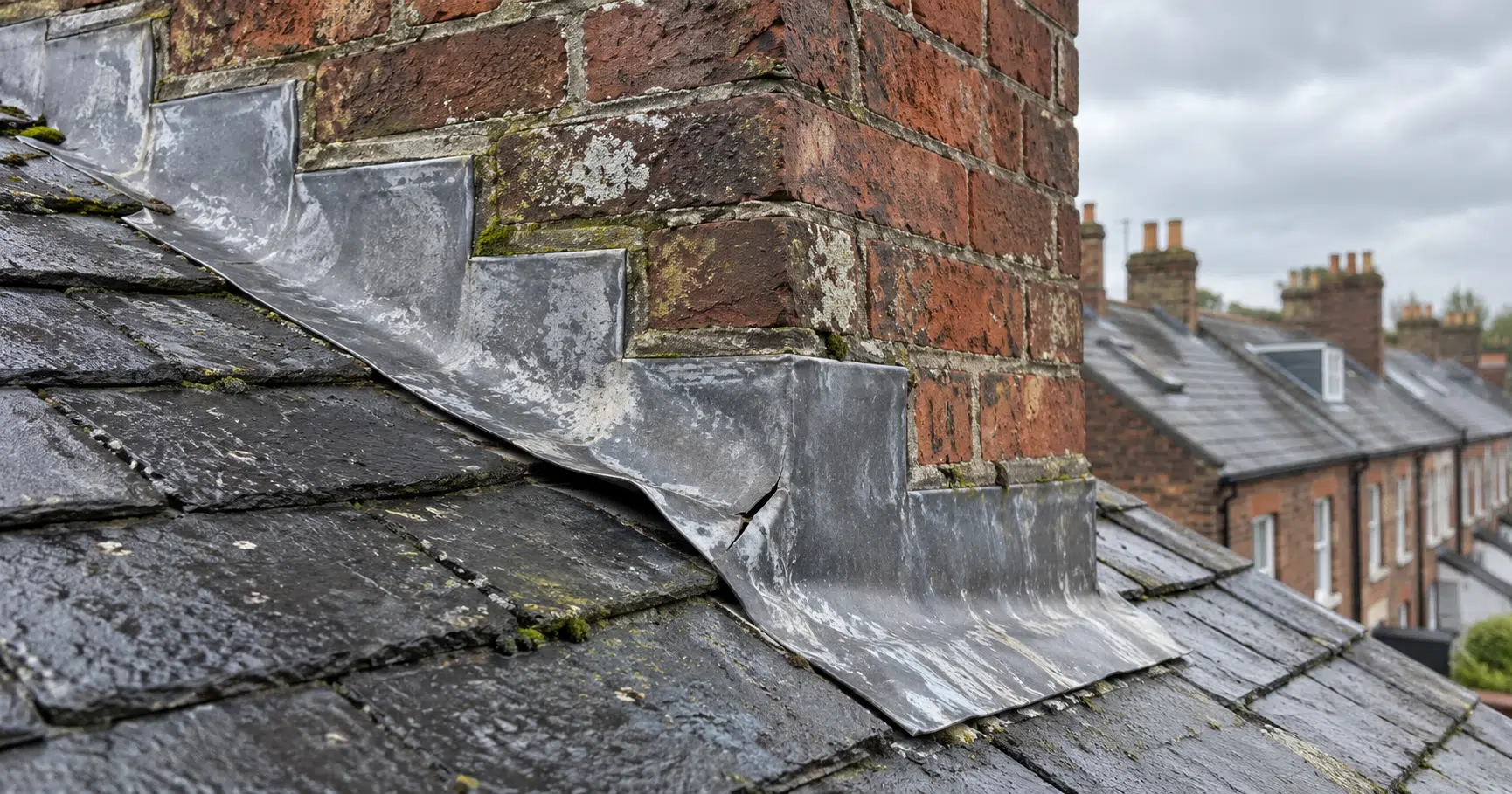
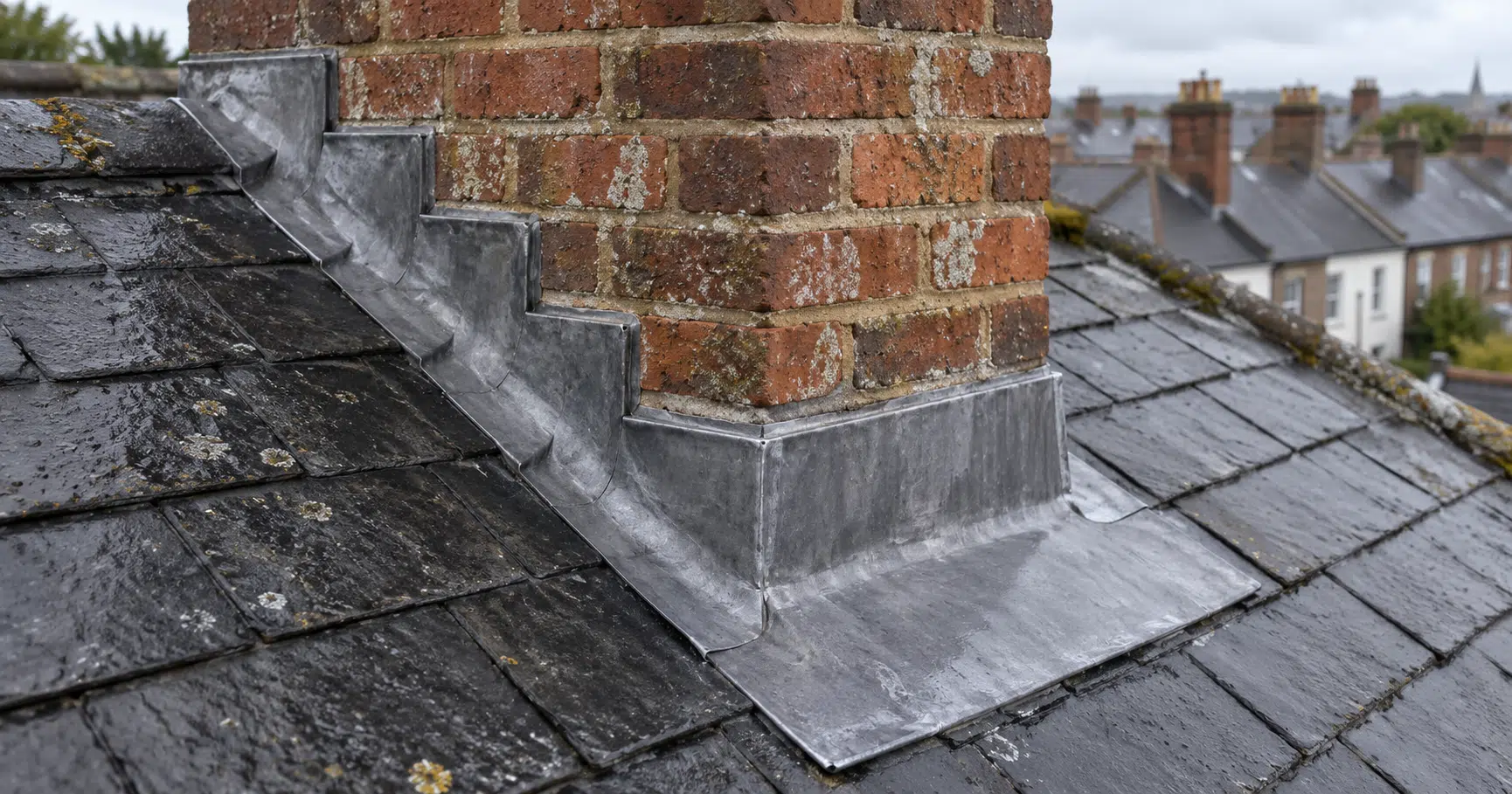
The narrow junction around a chimney can let water in even when the surrounding roof covering looks sound.
Key Takeaways
- Flashing is a system of overlapping details. The front, sides and uphill side of the chimney all need to shed water correctly.
- Lead needs room to move. Incorrect sizing or fixing can cause stress as it expands and contracts.
- A damp chimney breast does not prove a flashing fault. Masonry, the chimney top, nearby tiles and condensation may also need investigation.
- Local defects can sometimes be repaired. Widespread splits or an unsuitable installation may justify replacement.
- Compare the scope as well as the price. Access, materials and associated chimney repairs can make a substantial difference to the final cost.
What Is Chimney Flashing?
A chimney interrupts the roof covering. Tiles or slates cannot simply butt against the brickwork and keep that junction watertight through changing weather and movement. Flashing bridges it, using shaped material and overlapping layers to keep rain on the outside.
Lead is commonly used because it can be formed around corners and roof profiles. Purpose-made alternatives are also available, but each system needs the correct detailing for the roof and exposure. The visible metal is only part of the picture: concealed pieces and the way everything overlaps are equally important.
The Main Parts Around a Chimney
- Front apron: the flashing on the downhill face, dressed over the roof covering to shed water onto it.
- Side flashings: protect the sloping junctions along the stack. With slates and plain tiles, concealed soakers commonly work with the covering and the visible stepped flashing.
- Back gutter: the detail on the uphill side of a mid-slope chimney that collects water arriving from above and directs it around the stack.
- Cover flashing and masonry junction: the upper weathering detail protects the upstand below and is secured into the chimney rather than merely laid against its surface.
The arrangement changes with the chimney position and roof covering. A stack at the ridge, for example, needs different detailing from one halfway down a slope. This is why a flashing repair should be assessed as a complete junction, not just a visible strip of lead.
Why Does Chimney Flashing Fail?
Thermal Movement and Splitting
Lead expands and contracts as its temperature changes. If sections are too large or restrained too tightly, that movement can concentrate stress and eventually cause splits. The problem may develop around a fold or fixing rather than across the whole surface. Calder's leadwork guidance explains why secure fixing must still allow thermal movement.
Loose Flashing or Failed Pointing
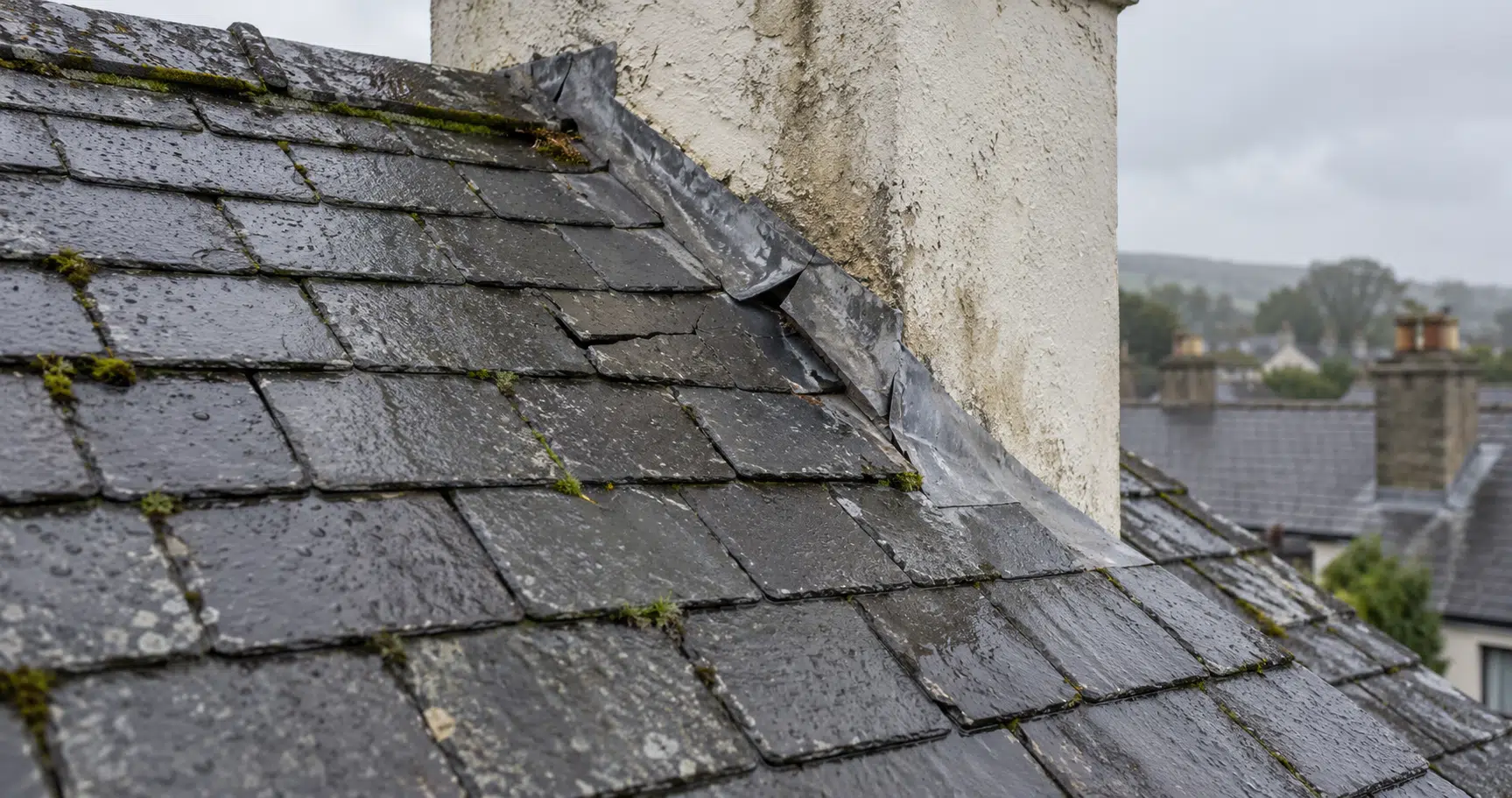
The upper edge needs a sound connection to the chimney. Deteriorating mortar, unsuitable sealant or inadequate fixing can leave a gap for rainwater. Sometimes the lead remains serviceable and the defect is concentrated at that junction. In other cases, movement has also distorted or damaged the flashing itself.
Poor Overlaps and Missing Details
Flashing works by managing water, not simply covering the line where brick meets tile. An unsuitable overlap, missing soaker or poorly formed corner may allow water beneath the roof covering. A neat-looking strip on the outside can hide an incomplete detail underneath.
Storm Damage and Disturbed Leadwork
Exposed edges can lift when fixings are inadequate or damaged. Leadwork can also be disturbed during other roof repairs. If a leak begins after a storm or nearby work, tell the roofer when you first noticed it. That history can help focus the inspection.
Debris Behind the Chimney
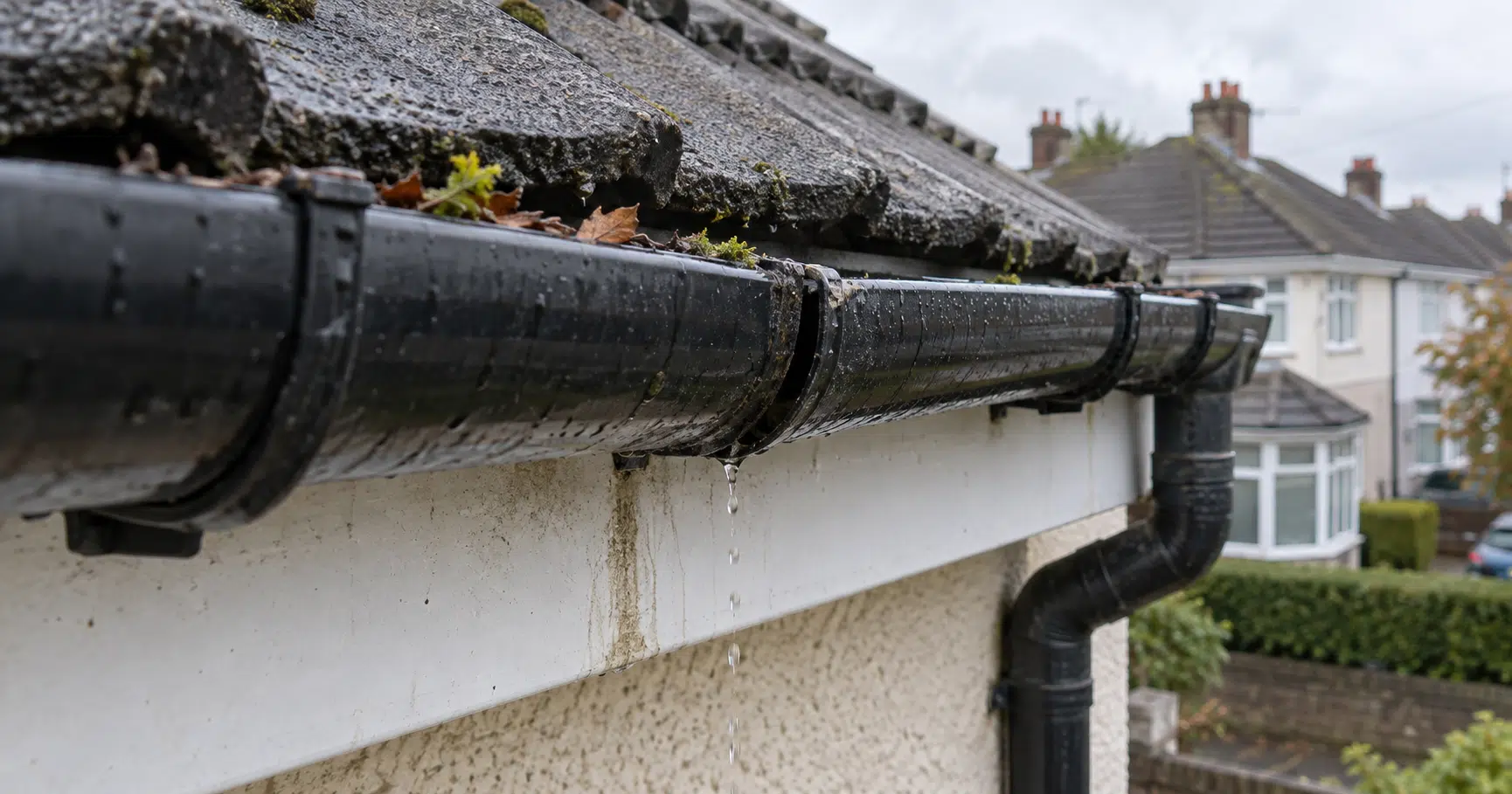
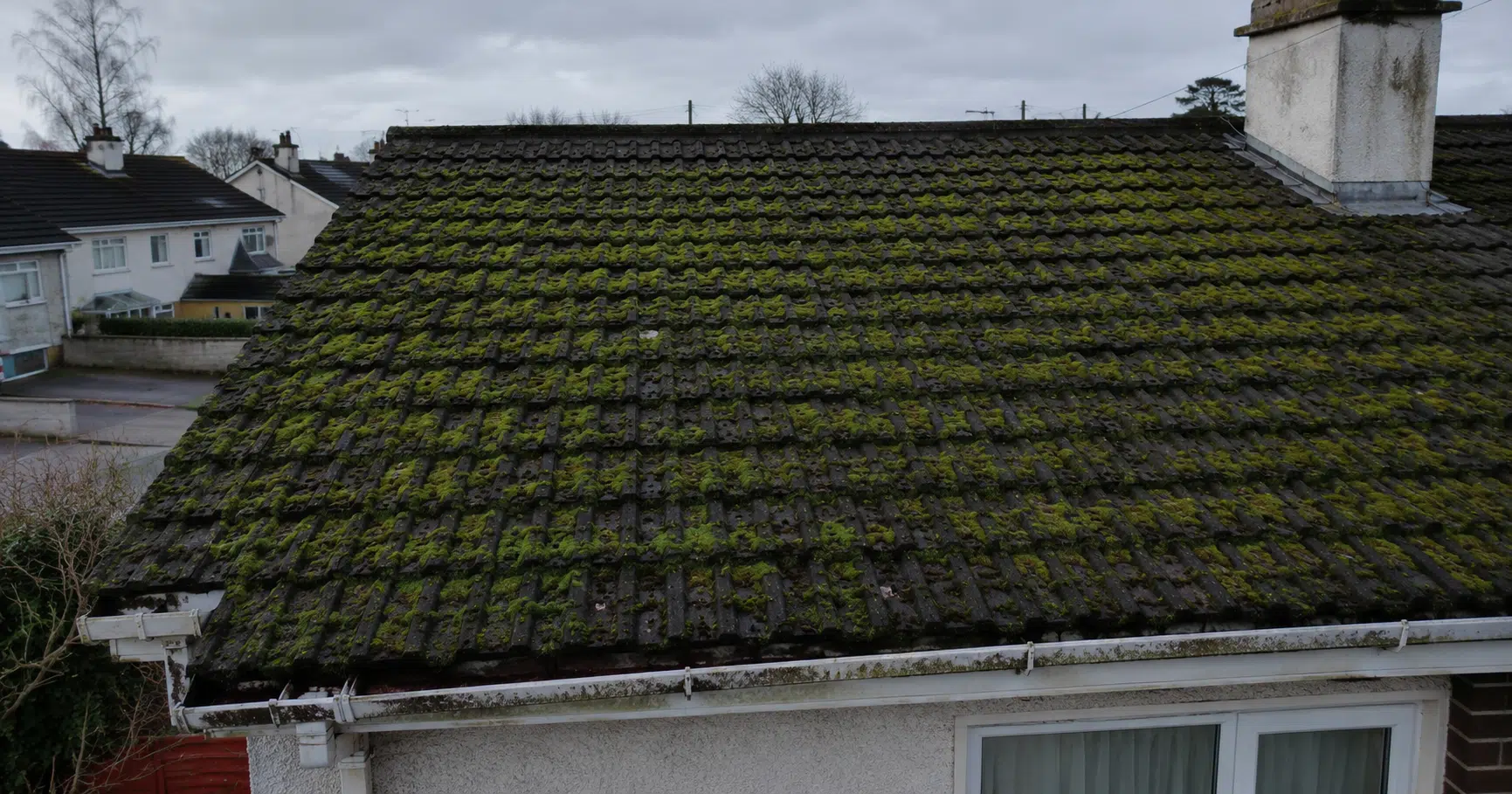
The uphill side is easy to overlook from the ground. Moss, leaves or fragments of mortar can collect there and obstruct the route water should follow. An inspection should establish whether the problem is damaged flashing, restricted drainage or both.
Signs of Water Ingress Around a Chimney
Water ingress simply means water entering the building. Around a chimney, the first evidence may appear indoors rather than on the roof.
- Brown ceiling marks beside the chimney breast, especially if they become more noticeable after rain.
- Peeling paint or bubbling plaster on the upper part of the chimney breast.
- Wet trails on the chimney masonry in the attic, or damp nearby timber and insulation.
- A recurring drip during windy rain, even when lighter showers cause no obvious problem.
- Visible lifted edges, splits or open joints in the flashing when viewed safely from the ground.
The position of a stain is a clue, not proof of the entry point. Water can travel along roof components before becoming visible. A patch beside the chimney may originate at the flashing, but a cracked tile further uphill could also be responsible.
Could the Leak Be Coming From Somewhere Else?
Yes. Defective pointing in the stack, cracked flaunching around the chimney pots, damaged masonry and problems at the chimney top can admit rain independently of the flashing. Condensation and moisture attracted by old chimney salts can also produce damp patches. A flashing replacement will not resolve every cause of a damp chimney breast.
A professional roof inspection should consider the stack, adjacent roof covering and internal evidence together. Take photos of fresh staining and note the weather when it appears. Avoid climbing onto the roof to investigate.
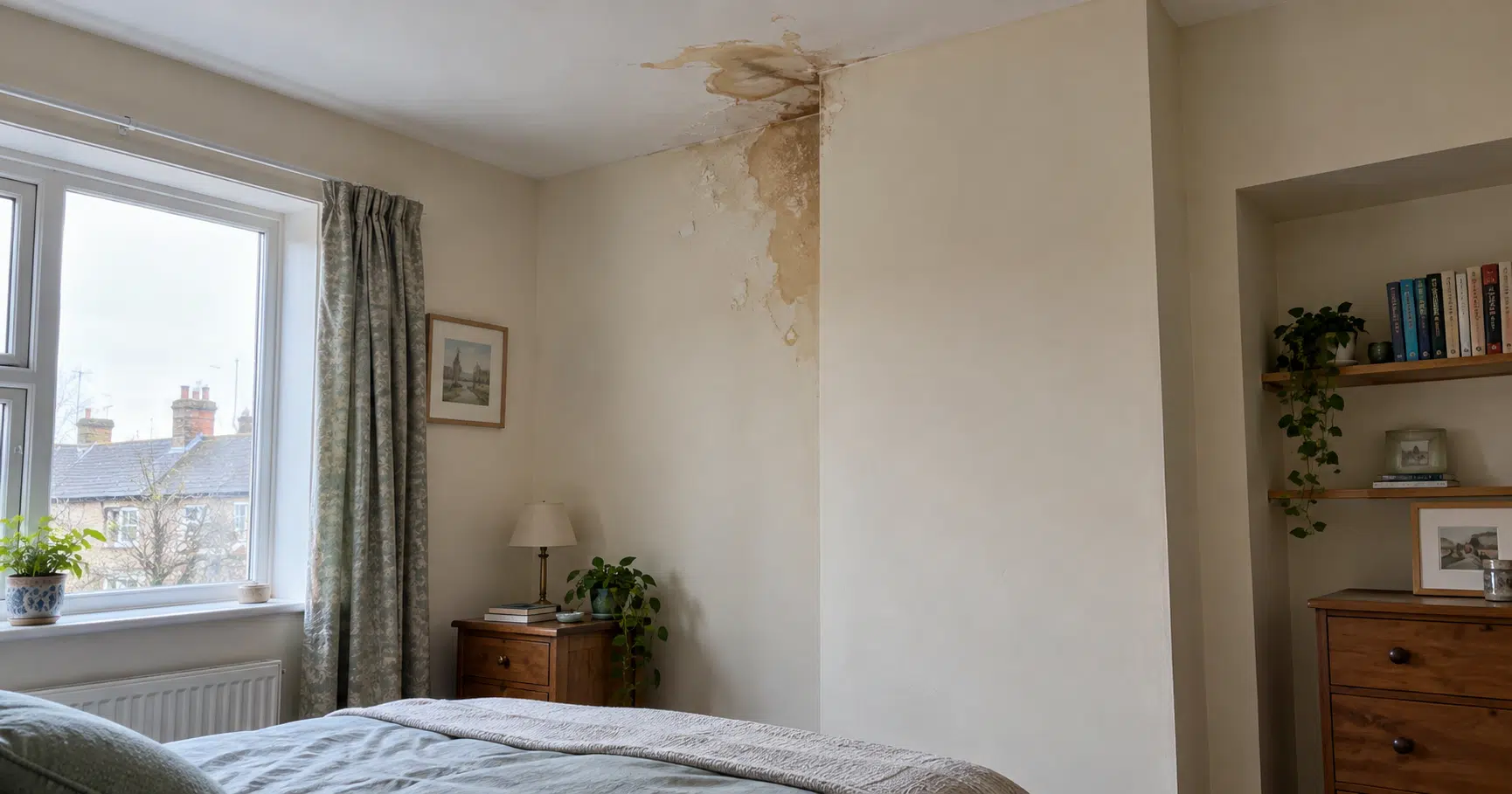
Rain-related staining near a chimney deserves investigation before the wall or ceiling is redecorated.
Can Chimney Flashing Be Repaired, or Does It Need Replacing?
Repair can be appropriate when the defect is localised and the surrounding material and detailing are sound. That might involve renewing a failed masonry joint, securing a loose section correctly or replacing one damaged component. The aim is to correct the cause while retaining material that can still perform reliably.
Replacement becomes more sensible where there are widespread splits, repeated failed patches or a fundamentally unsuitable arrangement. It may involve one side of the stack or a complete renewal. Ask which parts are included: replacing only the visible cover flashing is different from renewing concealed soakers and the back gutter as well.
Why Another Layer of Sealant May Not Solve It
A suitable lead-compatible sealant can form part of a correctly detailed repair. Smearing material over a moving crack, however, does not correct oversized leadwork, missing overlaps or loose masonry. A temporary weatherproofing measure should be described as temporary, with the permanent repair explained separately.
A Practical Example: One Damp Patch, Different Repair Options
Consider a bedroom stain beside a chimney after driving rain. If inspection finds sound lead with one failed upper joint, a targeted repair may be enough. If the lead has split in several places and the concealed details are defective, renewing the flashing assembly may be the better option. This is an illustrative example: the same visible symptom can lead to very different scopes of work.
Chimney Flashing Repair vs. Replacement Costs in Dublin
The cost depends on how much needs renewing and how the roofer can reach it safely. A small repair to an accessible junction and a full replacement around a tall chimney are different jobs, even if both are described as “fixing the flashing”.
For historical context, Onlinetradesmen's March 2024 Irish roof repair guide listed €200 to €700 for flashing or leadwork repair/replacement labour. Its figures exclude materials and VAT and do not separate small repairs from complete chimney flashing renewal. Treat that as background guidance, not a current Dublin quotation or an all-inclusive price.
| Work required | Repair or replacement? | Cost implications |
|---|---|---|
| One failed junction with sound surrounding lead | Targeted repair may be suitable. | Usually less material and labour than renewal, although safe access still has to be provided. |
| One damaged apron, side detail or back gutter | Partial replacement may be possible. | The cost depends on forming the component and opening up and reinstating the adjoining roof covering. |
| Multiple splits or unsuitable detailing | Full flashing replacement may be justified. | More leadwork and labour, with the opportunity to correct concealed defects around the stack. |
| Damaged masonry or roof timbers as well | Flashing work plus associated repairs. | These items need a separate allowance rather than being assumed to fall within a flashing-only price. |
For flashing replacement in Dublin, request an itemised quote covering access or scaffolding, removal, materials, the exact flashing components, roof-covering reinstatement, disposal and VAT. Ask how any hidden damage discovered during the work will be handled. This makes quotes easier to compare and reduces the risk of paying for a limited patch when you expected a complete renewal.
What Should a Proper Flashing Assessment Include?
- Review the symptoms: where the damp appears, when it started and whether it changes with rainfall.
- Inspect the whole junction: the uphill side, corners, masonry connections and adjacent tiles or slates.
- Explain the cause: photographs are useful for showing defects that cannot be seen from the ground.
- Set out the repair scope: identify what can stay, what needs renewing and any related chimney work.
- Check the completed work: confirm the overlaps, fixings and drainage route, and explain any follow-up needed.
If water is actively entering the house, move belongings clear and contain drips where it is safe to do so. Keep away from a bulging ceiling or water near electrical fittings. Contact our emergency roof repairs team if the leak needs urgent attention.
Worried About a Leak Around Your Chimney?
Roofing-Dublin can inspect your chimney and flashing, identify the likely cause and explain the repair or replacement options. Request a free inspection and quote before a recurring damp patch causes further damage.
Get a Free Chimney Flashing QuoteFrequently Asked Questions
Why does my chimney only leak in heavy or windy rain?
Heavier rainfall and wind can expose gaps or drainage problems that are not obvious during light showers. Flashing is one possibility, but the chimney masonry, top and nearby roof covering also need checking. The weather pattern helps the diagnosis; it does not identify the fault on its own.
How long should lead chimney flashing last?
Properly detailed leadwork can last for many decades. British Lead notes that correctly installed lead sheet can exceed 100 years, but that is a material capability rather than a promise for every chimney. Installation, condition and the surrounding masonry matter more than age alone.
Can chimney flashing be replaced without a new roof?
Often, yes. The roofer may need to lift and reinstate tiles or slates immediately around the stack to renew concealed details. A local flashing problem does not automatically require a full roof replacement, although any damaged adjoining materials should be included in the assessment.
Does chimney repointing fix a flashing leak?
Repointing addresses defective mortar joints. It may help where water enters through the masonry or the flashing's upper junction, but it will not repair split lead or missing soakers. Some chimneys need both masonry work and flashing repairs.
Why is the chimney breast still damp after a repair?
Previously wet masonry and plaster can take time to dry. However, fresh staining or renewed wetness after rain warrants another inspection, because another entry point may remain. Condensation or salts can also contribute. Tell the roofer whether the patch is drying steadily or becoming wet again.
Who should inspect leaking chimney flashing in Dublin?
Choose a roofer experienced in chimney junctions and leadwork who can explain the cause and provide a clear scope. Roofing-Dublin offers chimney and flashing repairs, including repair, replacement and installation.