How Often Should You Change Roof Gutters in Dublin?
It's one of those jobs you can easily put on the long finger. Gutters are up there doing their thing quietly and, as long as nothing is actively dripping down the wall, most of us don't give them a second thought. But gutters are not built to last and in Dublin's wet, windy climate, they're likely to age faster than people think. The tricky part is that there's no one-size-fits-all answer we can give you, how often you'll need to replace them depends on what they're made of, how well they've been looked after and how exposed your house is to the weather.

Dublin gutters move water on most days of the year, which is exactly why they wear out faster here.
In this guide we'll show you how long the different types of gutter actually last, the warning signs yours are on the way out, and how to tell if you're looking at a simple repair, or a full replacement. The aim is to guide you to make a sensible call before a tired gutter turns into a damp wall or a rotten fascia.
Summary
- There is no specific age for the replacement of gutters. The right answer depends on the material, what kind of maintenance and how exposed your house is.
- uPVC gutters are the most common type in Dublin homes and with reasonable care they usually last 20-25 years.
- Heavy rain, wind and coastal salt air in Dublin all shorten the working life of a gutter.
- Most gutter problems are created or made worse by a lack of cleaning, so proper maintenance really does add years to their life.
- Sagging, cracking, persistent leaks and staining on the fascia are the most obvious signs you need to replace instead of repairing.
There's No One Answer, But There's a Useful Rule of Thumb
For a quick guide, most modern gutters on a typical Dublin home will give you somewhere between 20 and 30 years before you need to replace them. uPVC is generally at the bottom of that, good quality metal at the top. But that's only a beginning. One that's never touched and gets the full blast of the weather will never last as long as a gutter on a sheltered house that's cleaned twice a year. So it is much more useful to watch the condition than counting the years. Long before your gutters actually fail, they'll let you know they're struggling.
Gutters Lifespan by Material
The material your gutters are made of is the biggest factor in how long they will last. Here's what to expect from the types you'll see on Dublin homes.
uPVC (Plastic)
The most popular gutter material for Irish homes today is uPVC by far and there is good reason for this. It is cheap, light, does not rust and needs very little upkeep. The trade off is it can get brittle over time, especially after years of UV exposure and temperature swings, which eventually leads to cracking at the joints. On average, a well maintained uPVC system should last you around 20 to 25 years.
Aluminium
Aluminium gutters are an upgrade in durability. They will not rust, they are weather resistant and they can last 25 to 30 years, or more. Aluminium gutters made seamless, to length on site, have fewer joints to fail and tend to last even longer.
Cast Iron
Many of the older and period houses in Dublin still have their original cast iron gutters, and cast iron, if kept painted and maintained, can last a very long time, often 50 years or more. The downside is it is heavy, it rusts if the protective coating is compromised and the repairs are more specialised. Replacing like with like on a period property is often worth it for the look of it, but it's a bigger job.
Galvanised Steel
Galvanised steel falls somewhere in the middle. It's strong, but the zinc coating that keeps it from rusting wears away over time. And once rust sets in, the gutter's days are numbered. Galvanised steel will usually last for around 20 years before you see any rust.
How Dublin's Climate Affects Gutter Lifespan
Gutters in Dublin have a lot more work to do than gutters in a drier part of the world. It rains on a lot of days during the year so your gutters are rarely dry for long and are constantly moving water. Heavy downpours put a lot of strain on joints and brackets, while strong Atlantic winds can loosen fixings or block gutters with debris. If you live on or near the coast the salt in the air adds to the corrosion speed of any metal parts. And then there are the autumn leaves that fall and the moss that thrives in our damp climate, both of which clog up the gutters and cause the overflow that does the real damage. So a gutter in Dublin will generally have reached the end of its life sooner than the same gutter in a milder, drier climate.
Warning Signs That Your Gutters Need to Be Replaced
There is no need to guess. Gutters give ample warning when they're failing, and these are the signs worth acting on:
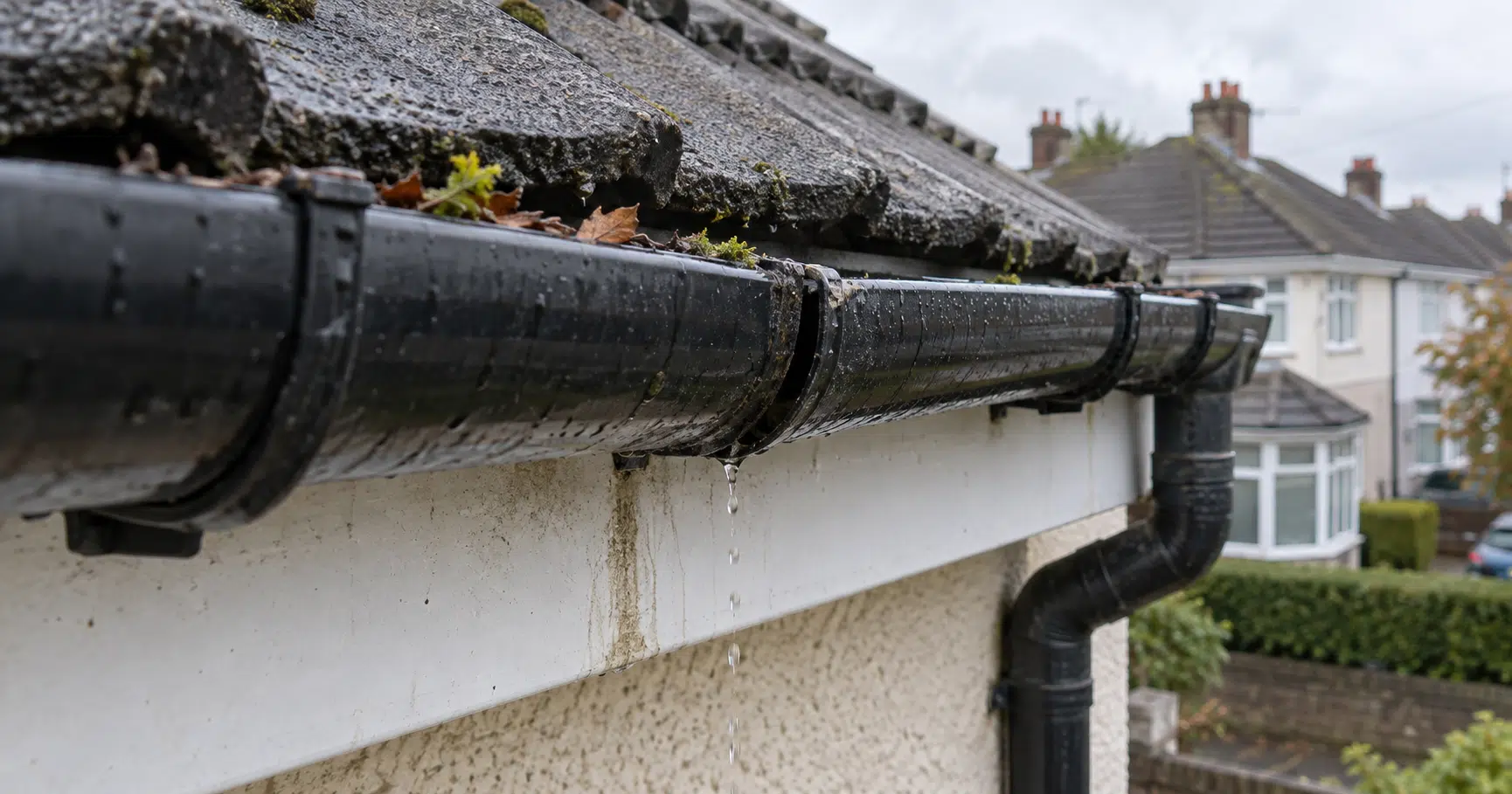
- Any cracks or splits in the gutter, however small, allowing water to escape, and likely to grow with frost.
- Sagging or uneven sections, which means the brackets or the fascia behind the brackets are giving way.
- Leaks at the joints that persist even after cleaning or resealing.
- Rust or flaking on metal gutters, which only gets worse if it starts.
- Stains or damp patches on the fascia or the wall below, which are a sure sign water is going where it shouldn't.
- Water pooling in the gutter instead of draining off, usually a sign of sagging or misalignment.
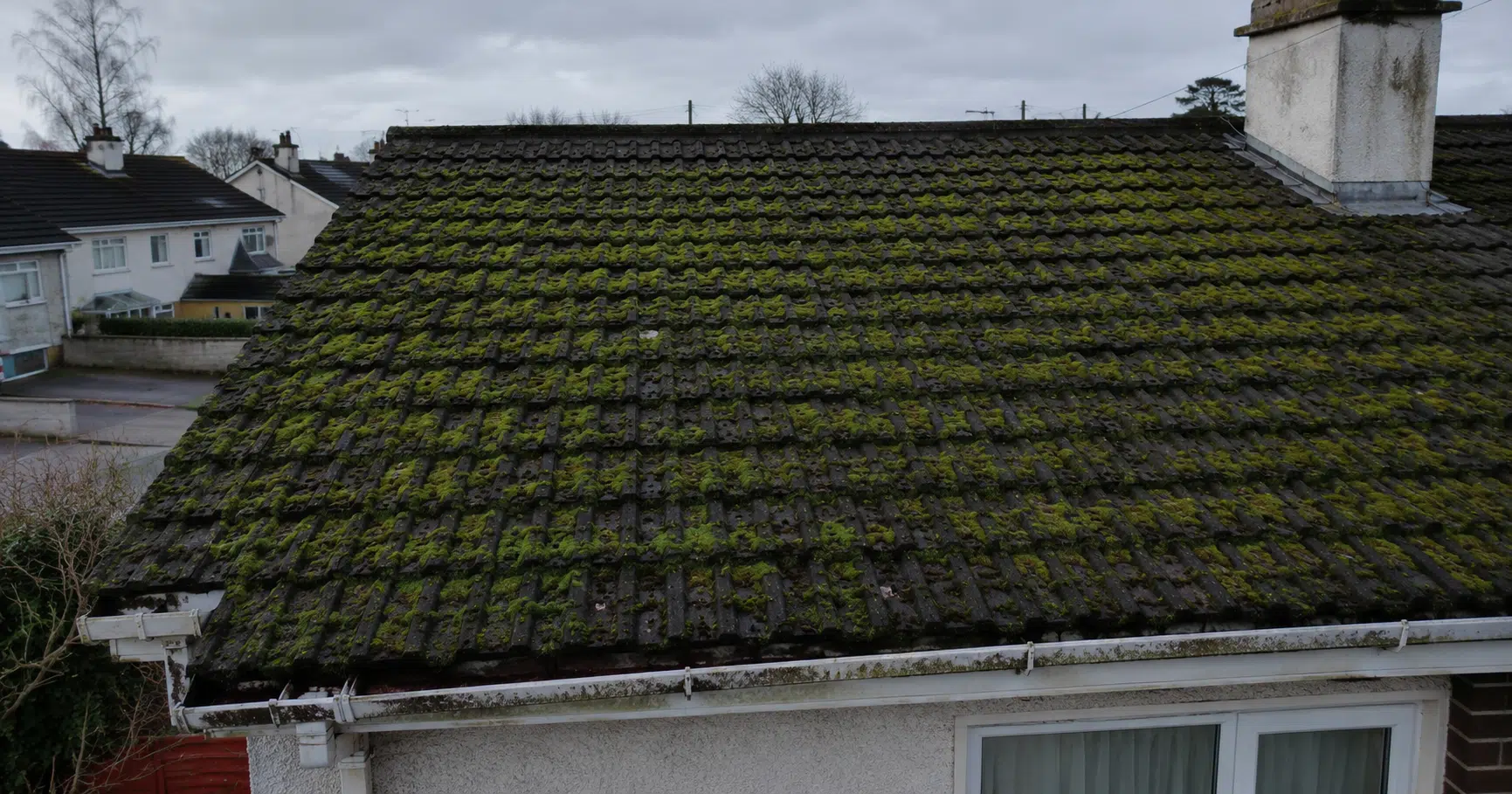
- Plants or moss growing in the gutter, meaning debris has been in there long enough to grow.
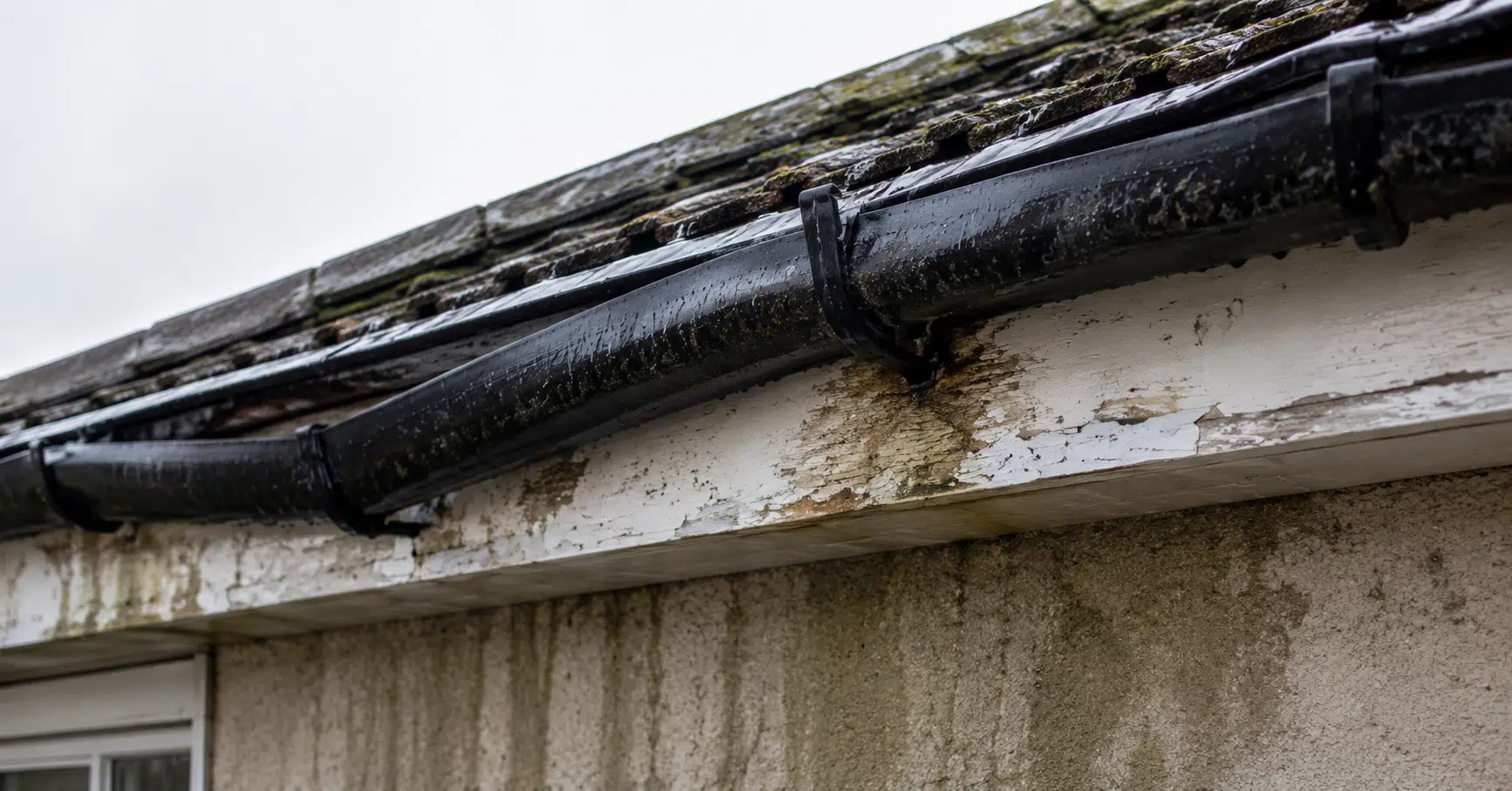
Several of these signs together usually mean you're past patching and into replacement territory.
If you're looking at several of these at once, you're probably beyond patching and into replacement territory.
Should You Repair or Replace? How to Tell the Difference
Not all gutter problems call for a full replacement. The trick is to be upfront about the overall condition rather than chasing one leak after another.
When a Fix Will Do
If the gutters are in generally good shape and you have an isolated problem, a leaking joint, a loose bracket, a single cracked section, a repair is usually the sensible, cost-effective choice. On a good repair on an otherwise healthy gutter system, years can be bought.
When to Replace
When problems start to mount, repairs are a false economy. And if you're resealing joints every year, if there's sagging along the run, if metal gutters are rusting through, or if the fascia behind them is rotting, it's the better long-term decision to go ahead and replace the system. Sound fascia will have new gutters fitted and will save you the steady drip of repair callouts and properly protect the wall and roofline.
Ways to Make Your Gutters Last Longer
No matter what material you have, the single most important thing you can do to extend the life of a gutter is to keep it clean. Most gutter failures happen prematurely, not due to material fatigue but because debris caught in it causes water to spill over and accumulate where it shouldn't. A simple routine works wonders:
- Clear leaves, moss and debris at least twice a year, and always after the autumn leaf fall.
- Ensure that downpipes are free-running and not blocked at the outlet.
- Watch brackets and fixings and tighten or replace any that are coming loose.
- Trim back low-lying branches that drop leaves straight into the gutter.
- Fix small leaks quickly, before frost turns a hairline crack into a split.
Just take care doing it, working at height is where most DIY accidents happen, so anything you can't reach safely from the ground is best left to a professional.
None of this is sexy. But it is the difference between a gutter that will last 15 years and that same gutter lasting 25.
Sectional vs Seamless Gutters
It's worth knowing the difference if you're replacing your gutters. Sectional gutters come in standard lengths that join together. Easy to install and repair but each joint is a future potential leak. Seamless gutters are made in one continuous piece to fit your roofline. They have far fewer seams and generally last longer with less trouble. Seamless is usually a little pricier to start, but for many homeowners the reduction in leaks and maintenance is worth the cost.
Gutters past their best, or not sure if it's repair or replace?
We'll take a proper look, give you a straight answer on what's needed, and a clear price with no obligation.
Get a Free QuoteFrequently Asked Questions
How long do gutters last in Ireland?
Most modern Irish homes have gutters that last between 20 and 30 years depending on the material and maintenance. uPVC will generally last around 20-25 years, with good quality metal guttering lasting longer. Regular cleaning makes a real difference to where you land in that range.
How do I know when my gutters need to be replaced or repaired?
If the problem is isolated, such as a single leaking joint or a loose bracket, a repair is generally sufficient. Sagging along the run, repeated leaks, rust on metal gutters or staining on the fascia all point to replacement. It is the overall condition that matters, not any single defect.
How often should I get my gutters cleaned in Dublin?
Most homes at least twice a year, always after autumn when the leaves come down. It may be more necessary in houses surrounded by trees. The easiest way to stop the overflow which shortens a gutter's life and damages the fascia behind it is by regular cleaning.
Can old gutters damage my home?
Yep. Leaking or overflowing gutters direct water down the wall and behind the fascia and over time this causes damp, staining, rot in the roof timbers and even problems at the foundation. That's why good gutters are worth replacing rather than living with.
How much does it cost to replace gutters in Dublin?
It depends on how big the property is, what material you want to use and if the fascia needs work too. Since no two homes are the same, the only way to know for sure is to have it evaluated. We would be happy to take a look and provide you with a clear, no obligation quote.