The Real Cost of Ignoring a Small Roof Leak in Dublin
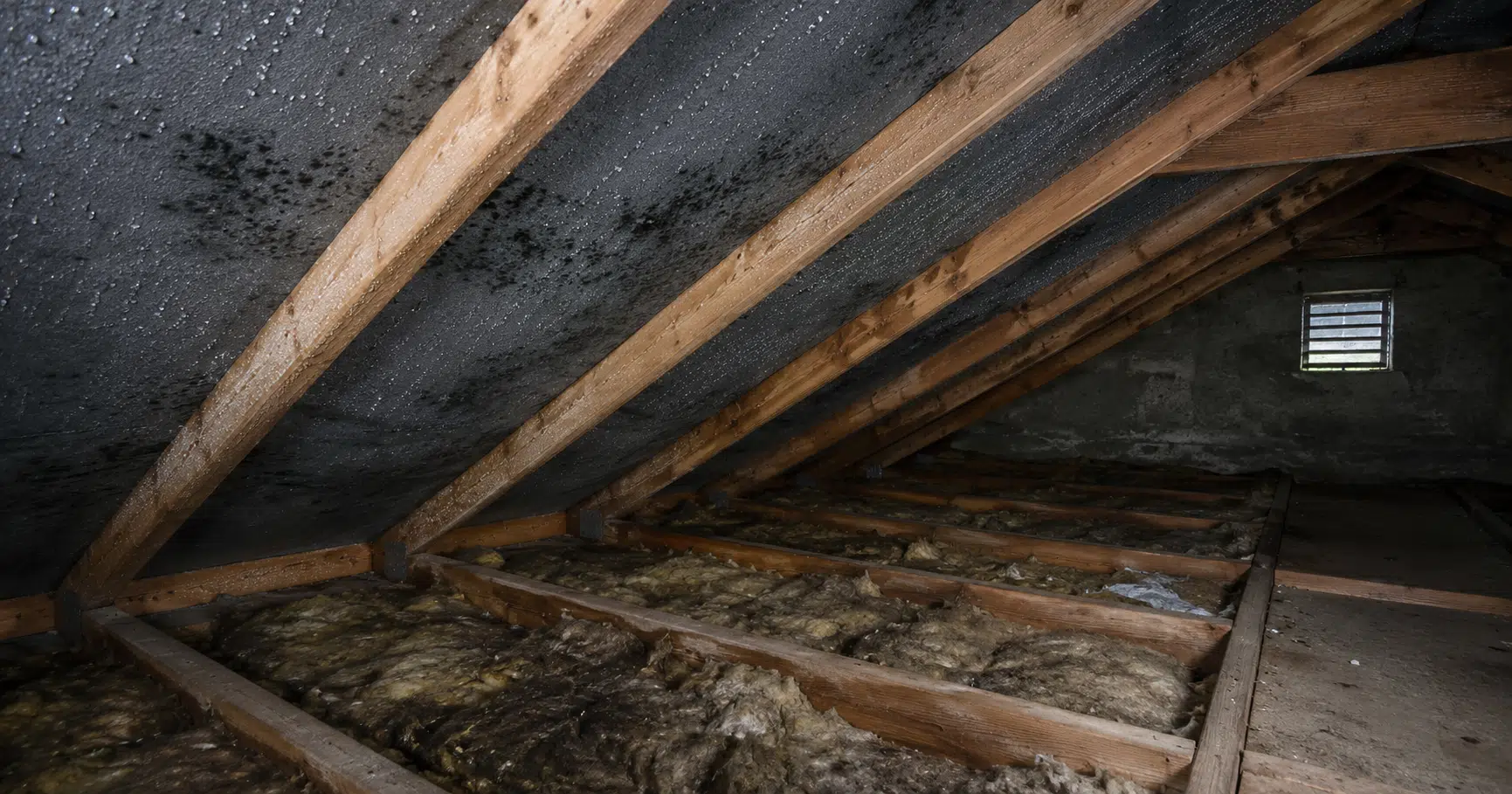
A faint brown ring on the ceiling. A musty smell in the spare room after a wet week. A drip you only hear when the wind is coming from the right direction. It is the easiest thing in the world to look at a small roof leak and decide it can wait until spring, or until the budget is a bit healthier, or until it simply gets worse. The trouble is that by the time it gets worse, the bill has usually grown with it. We have been called out to more "tiny leaks" that turned into ceiling collapses and rotten rafters than we would care to count, and the story is nearly always the same: it was small once.

A small ceiling stain is often the only visible sign of a much larger problem above.
This article is not about scaring anyone. It is about putting honest numbers and consequences beside that little damp patch so you can make a sensible decision. Because in our experience, the cost of fixing a leak early is almost always a fraction of the cost of ignoring it.
Key Takeaways
- A small leak rarely stays small. Water finds the path of least resistance and spreads quietly through timber and insulation long before you ever see a stain.
- Dublin's wet, windy climate accelerates the damage, with frequent rainfall and freeze-thaw cycles working away at any weak spot.
- The real cost is rarely just the roof. Rotten timber, ruined insulation, mould, higher heating bills and electrical risks all stack up.
- Mould and damp are a genuine health issue, not just a cosmetic one, especially for children and anyone with asthma.
- Early inspection is the cheapest option you have. A quick repair in autumn beats an emergency call-out in January every single time.
Why a Small Leak Never Stays Small
The first thing to understand is that the wet patch you can see is almost never where the leak actually is. Water moves. It runs along the underside of felt, tracks down a rafter, pools on top of a plasterboard ceiling and then shows itself several feet away from the real entry point. That is exactly why a leak that looks like a minor stain can be doing real structural work out of sight.
Water Doesn't Travel in Straight Lines
A single displaced tile or a hairline crack in flashing lets in a surprising volume of water over a wet Irish winter. That water soaks into the roof timbers, the insulation and the ceiling boards, and it keeps going every time it rains. The damage is cumulative and invisible. By the time a homeowner notices a stain spreading or paint starting to bubble, the materials underneath have usually been wet, dried and re-wet dozens of times.
Dublin's Climate Speeds Everything Up
We are not exactly short of rain. Dublin sees rainfall on a large share of days through autumn and winter, and you can check the long-term picture for yourself through Met Éireann's climate data. Add in the Atlantic winds that lift and loosen tiles, and the freeze-thaw cycle where trapped water freezes overnight, expands and widens every crack, and you have close to ideal conditions for a small leak to become a big one. A flaw that might sit harmlessly for years in a dry climate can fail in a single Dublin winter.
Where Dublin Roof Leaks Usually Start
Leaks are rarely random. In Dublin homes they tend to begin in the same handful of weak points, and knowing where they are makes it far easier to catch a problem early.
Flashing Around Chimneys and Vents
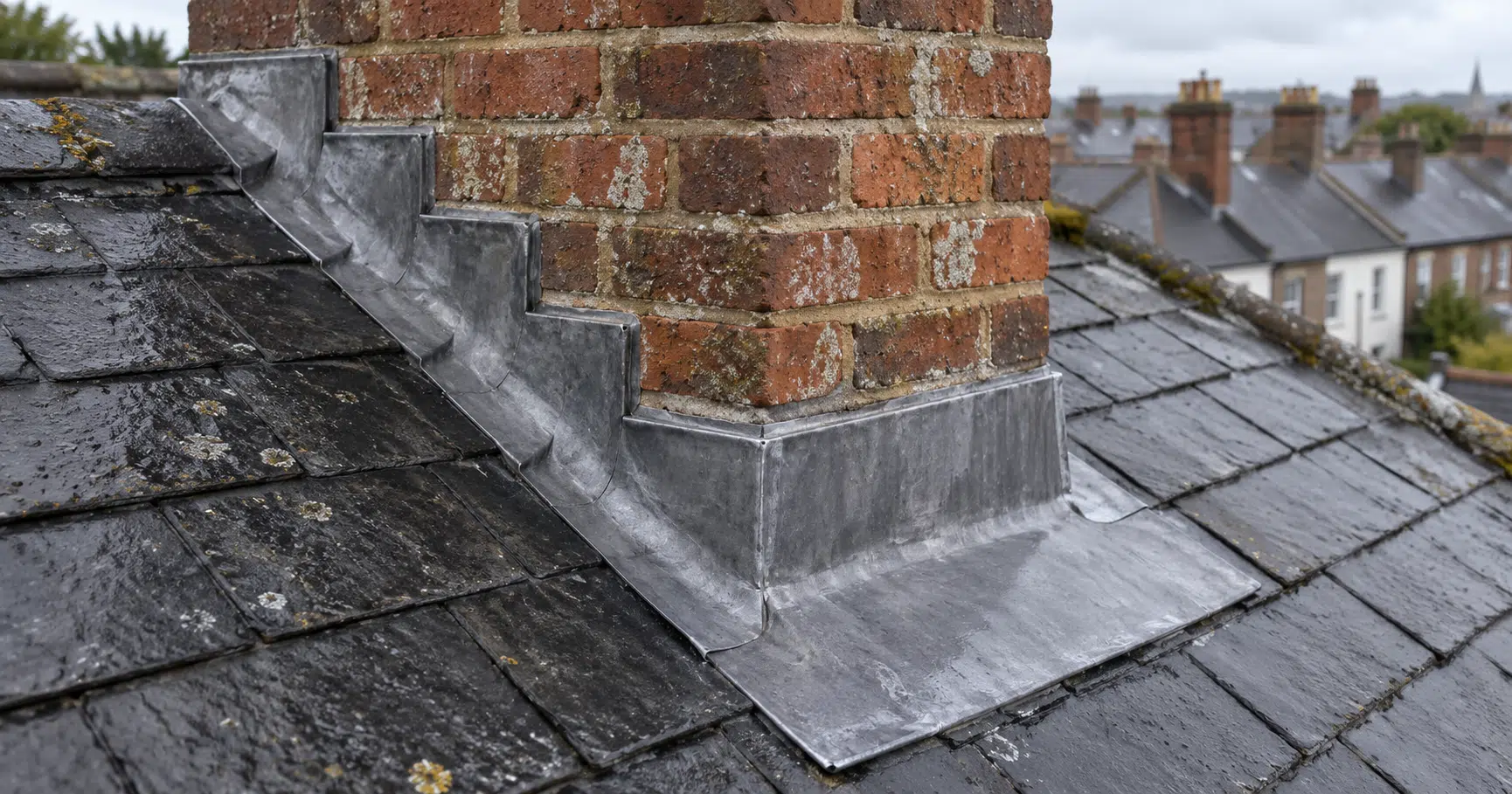
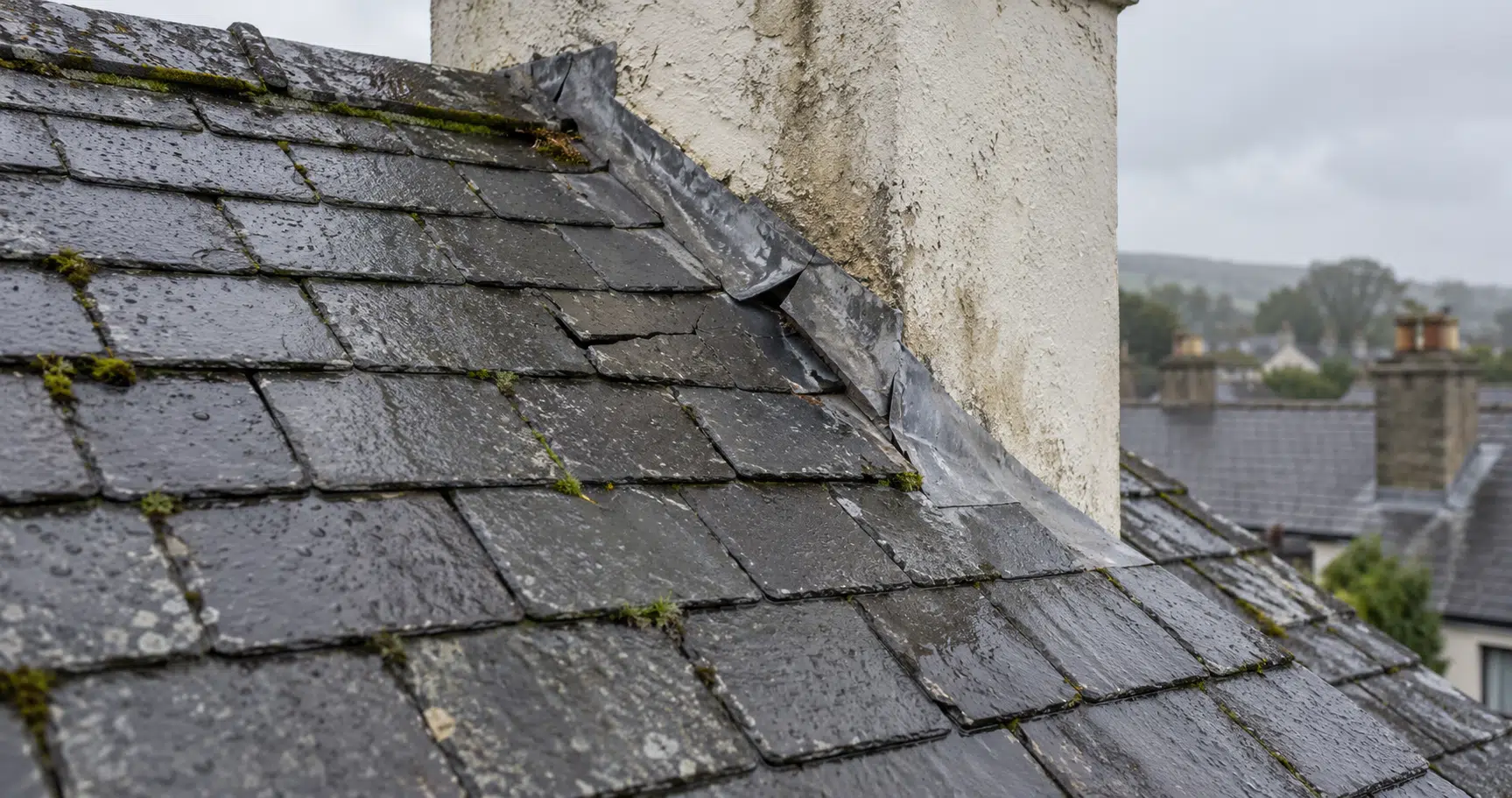
Flashing is the metal or lead detail that seals the joint where the roof meets a chimney, a vent or a skylight. It is one of the most common starting points for a leak, because those joints move slightly with heat and weather over time, and old or cracked flashing simply lets water straight in. Because the water then runs down the inside of the chimney breast, the stain often appears in a completely different room. Having the flashing around chimneys and vents checked is one of the highest-value things you can do before winter.
Slipped, Cracked or Missing Tiles
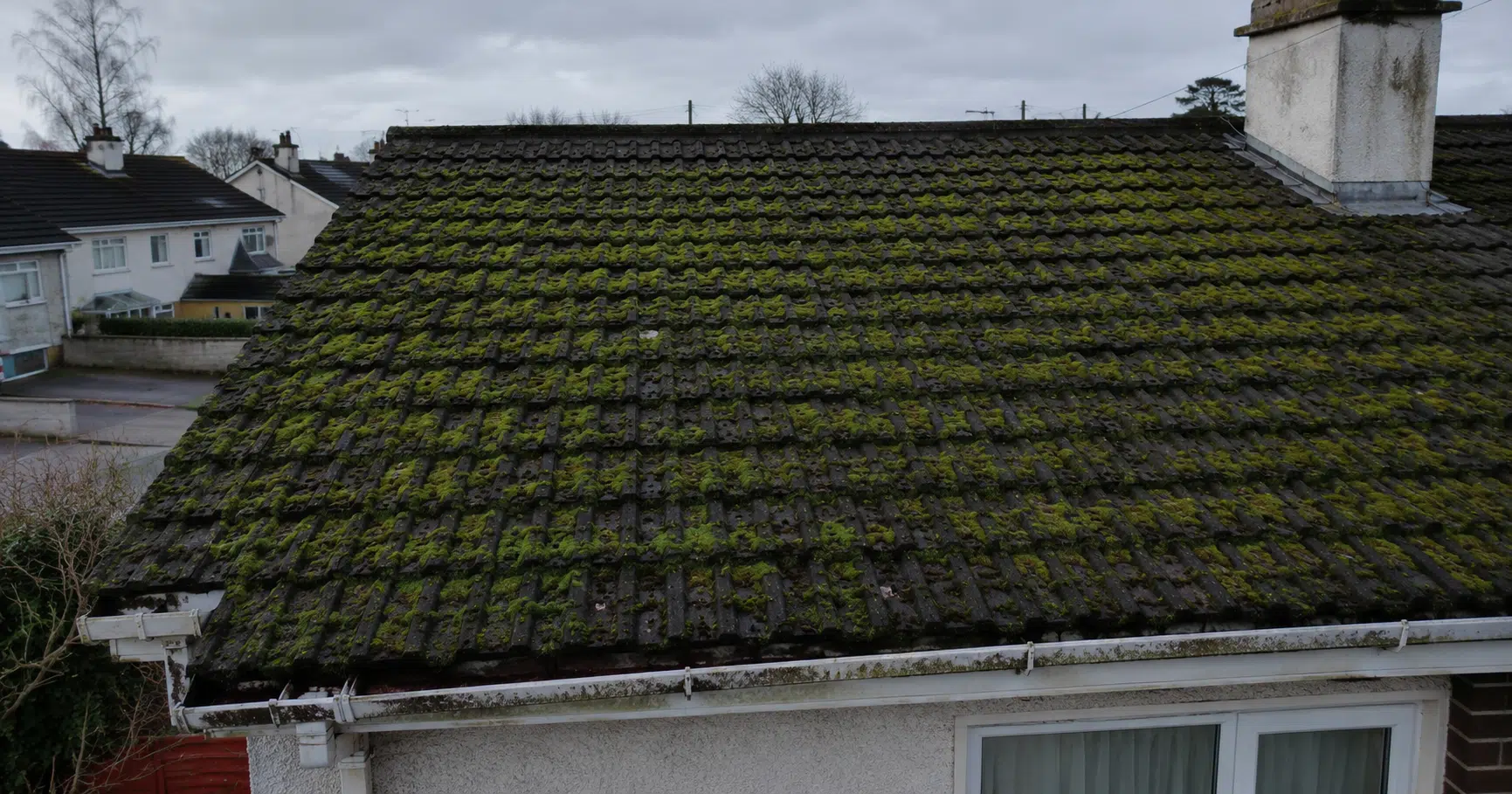
A single tile lifted or cracked by a storm leaves the felt beneath exposed, and felt is the last line of defence, not the first. Once it is doing the job a tile should be doing, it degrades quickly. One missing tile is enough to start a leak that ruins the timber below it.
Blocked or Failing Gutters
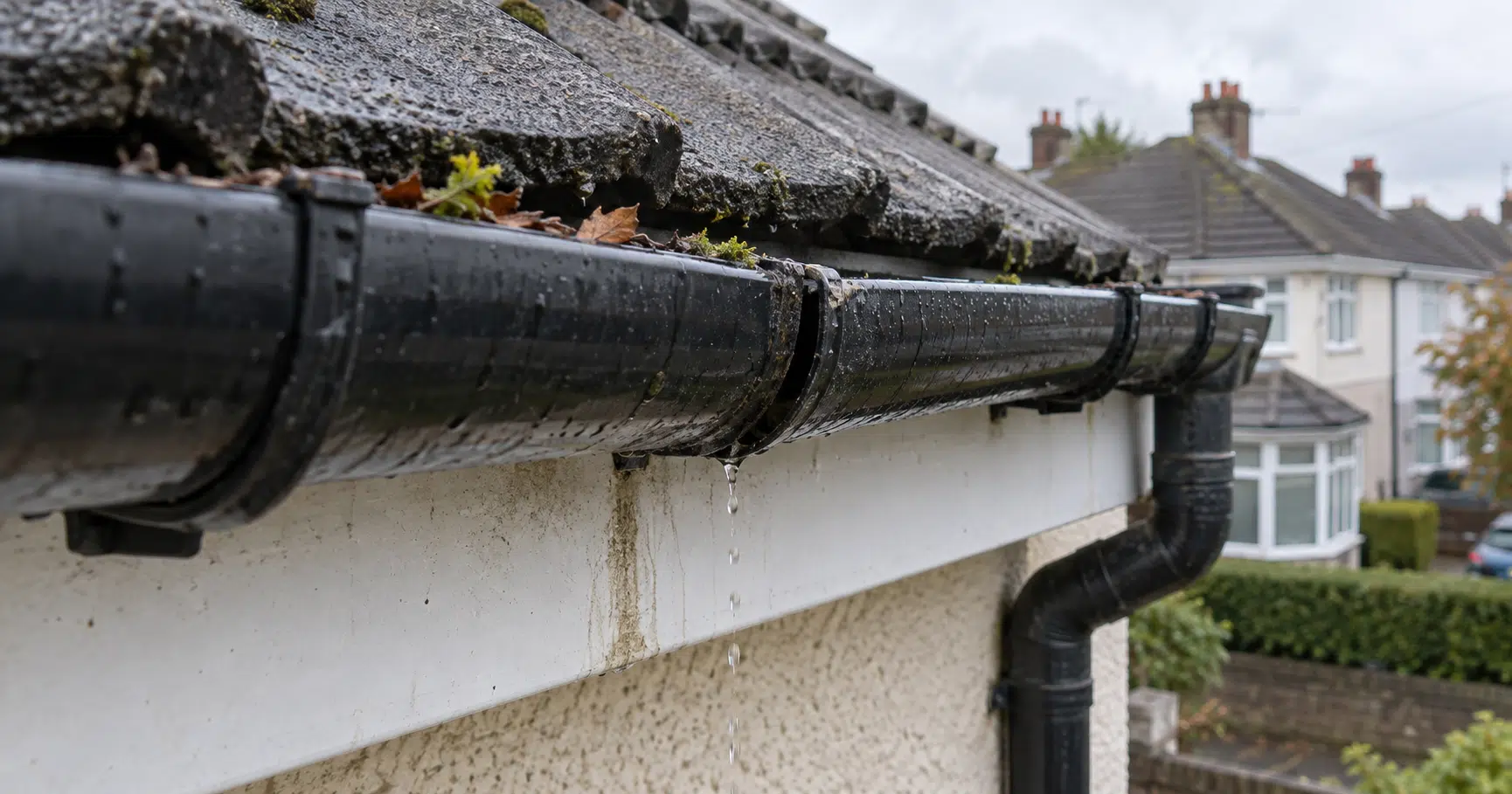
When gutters clog with leaves and moss, water backs up under the edge of the roof instead of draining away. In Dublin's wetter months this is a constant, slow source of water ingress at the eaves, exactly where your fascia and roof timbers are most vulnerable.
Flat Roof Sections
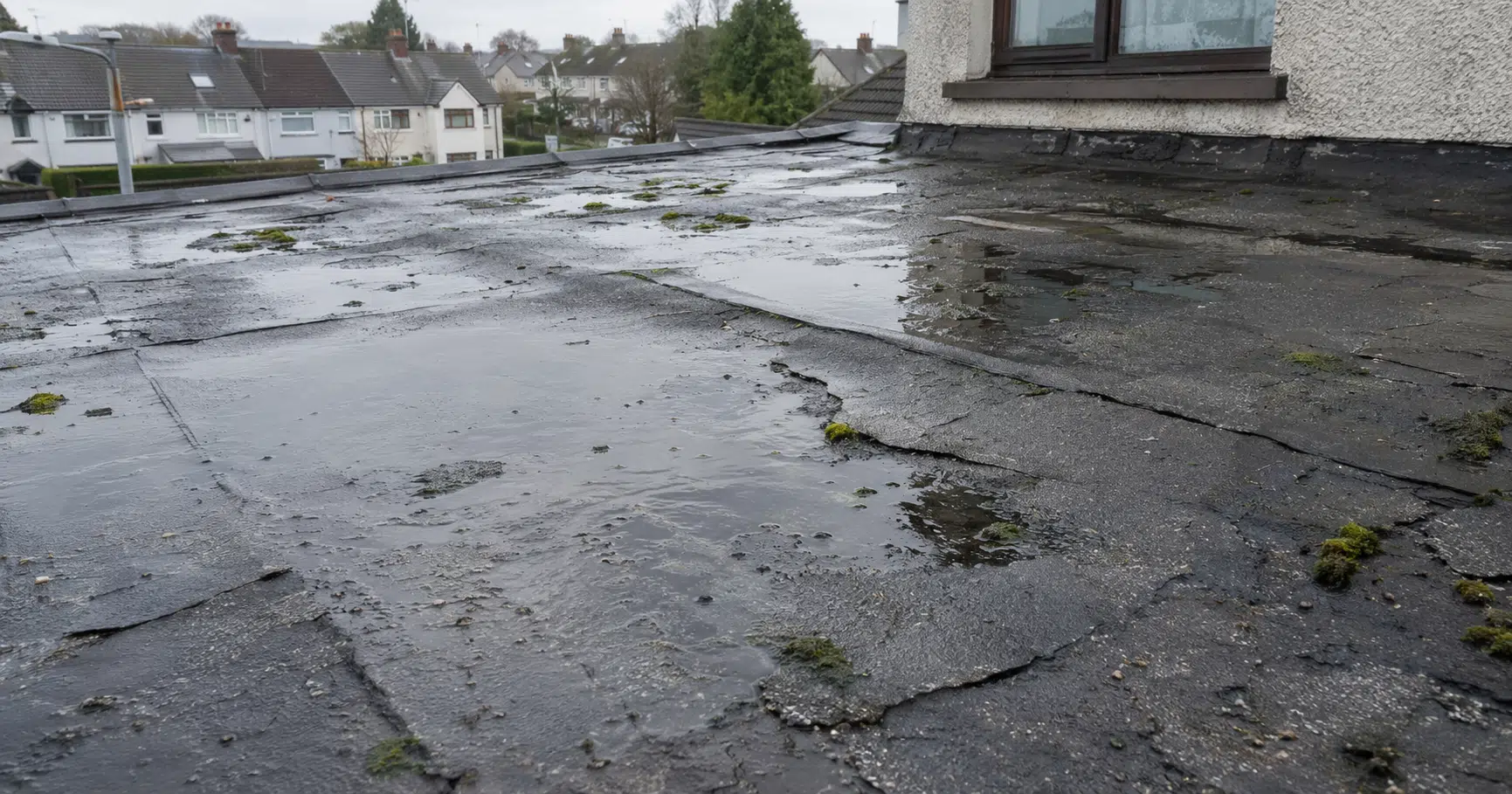
Many Dublin homes have a flat roof over an extension, a porch or a dormer. Older felt flat roofs are particularly prone to ponding and splitting, and a flat roof that has reached the end of its life will leak no matter how many times it is patched.
The Real Cost, Broken Down
When people picture the cost of a leak, they picture the patch of roof that needs fixing. In reality, the roof itself is often the cheapest part of the whole job by the time we are called. Here is where the money actually goes once a leak has been left to its own devices.
Timber Rot and Structural Damage
This is the big one. The rafters, battens and joists that hold your roof up are timber, and timber that stays wet starts to rot. Wet rot softens the wood; dry rot is a fungus that can spread through sound timber and is genuinely serious. Once structural timber is compromised, you are no longer paying for a repair, you are paying for replacement, and possibly for scaffolding and a structural assessment on top. A €200 flashing fix and a €4,000 timber replacement often start as the exact same leak.
Damp, Mould and Your Family's Health
Persistent damp creates the perfect home for mould, and mould is not just an eyesore. Damp and mould in the home are linked to respiratory problems and can make conditions like asthma noticeably worse, as the NHS guidance on damp and mould sets out clearly. For young children, older people and anyone with a breathing condition, a leaky roof is a health issue and not only a building one. Removing established mould properly and treating the affected rooms adds cost and disruption that a timely repair would have avoided entirely.
Wet Insulation and Rising Energy Bills
Loft insulation only works when it is dry. The moment it gets wet it compresses, clumps and loses most of its thermal value, which means heat escapes straight through your roof and your heating system works harder to keep up. With energy costs where they are, that is money leaking out month after month. You can see just how much heat a home loses through the roof in SEAI's guidance on home insulation. A leak you ignore in October can quietly inflate every heating bill until it is fixed.
Electrical Hazards
Water and electricity are a combination nobody wants in their attic. Many homes run cabling, junction boxes and sometimes immersion or solar gear through the roof space. Water tracking along a beam can reach that wiring, and at that point you have a safety risk as well as a repair bill. This is one of the reasons we never recommend leaving an active leak to "see how it goes".
Small Fix vs Big Repair: The Numbers
Every roof and every leak is different, so treat the following as indicative ranges rather than a quote, the only way to know your figure is to have the roof looked at. But the pattern is consistent, and it is worth seeing side by side.
- Caught early (weeks): a slipped tile, a re-seal of flashing or a small felt repair. Typically a modest, single-visit job.
- Left a few months: the repair now includes drying out, replacing damp insulation and re-skimming or repainting a stained ceiling.
- Left through a winter: add rotten battens or rafters, possible mould treatment and more extensive internal making-good.
- Left a year or more: structural timber replacement, scaffolding, and in the worst cases a partial re-roof, often several thousand euro.
The jump from the first line to the last is rarely caused by a worse leak. It is caused by time. The same drop of water, given long enough, simply does more damage to more things.
Warning Signs Worth Acting On Today
You do not need to climb onto the roof to catch a problem early. Most leaks announce themselves indoors first, and these are the signs we would never ignore:
- Brown or yellow stains on ceilings or upstairs walls, especially ones that grow or darken after rain.
- A musty, damp smell in bedrooms, the landing or the attic that does not shift with airing.
- Bubbling or flaking paint and wallpaper lifting at the edges.
- Damp or matted loft insulation, or daylight visible through the roof boards when you are up there.
- Drips during heavy rain, even occasional ones, are a clear sign water is already getting in.
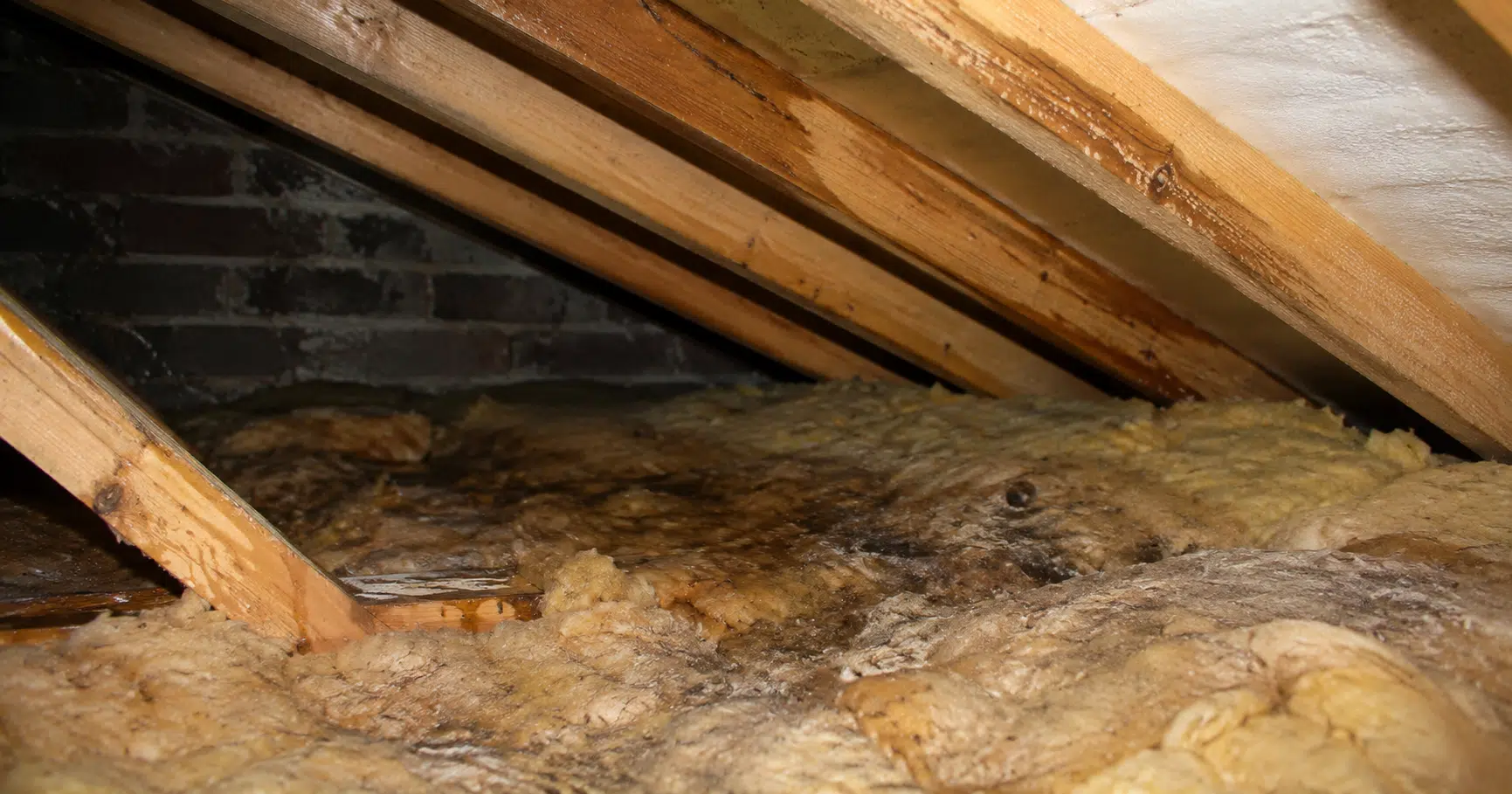
Damp insulation and discoloured timbers are early warnings most homeowners never see.
What to Do the Moment You Spot a Leak
In the First Hour
If water is actively coming in, contain it first. Move furniture and electronics clear, put down a bucket or basin, and if a ceiling is bulging with trapped water, it is safer to pierce it carefully over a container than to let it collapse on its own. Take a few photos as you go, they are genuinely useful for both the repair and any insurance claim later.
When to Call in a Professional
A small, dry-day fix is sometimes a DIY job. An active leak in a Dublin winter usually is not, both because of the safety risk on a wet roof and because the real source is often somewhere other than where the water appears. If the leak is ongoing, our emergency roof repair service can make things watertight quickly before the damage spreads further. If you simply want to know what condition your roof is in before winter, a professional roof inspection will catch the small problems while they are still cheap to fix.
One more practical point: hold onto your photos and any reports. Depending on the cause, some roof damage may be covered by your home insurance, and it is worth understanding where you stand, Citizens Information has a clear overview of how home insurance generally works in Ireland.
Spotted a leak, or not sure what's going on up there?
Get it looked at while it's still a small job. We'll give you an honest assessment and a clear price, no pressure.
Get a Free QuoteFrequently Asked Questions
How quickly can a small roof leak actually cause serious damage?
Faster than most people expect, especially in winter. Because water tracks through timber and insulation out of sight, materials can be quietly rotting for weeks before a stain even appears. In a wet Dublin winter, a leak left for a single season is often enough to move a job from a minor repair to one involving damaged timber and ruined insulation.
Can I just paint over the water stain on my ceiling?
Painting over a stain only hides the symptom, the water is still getting in and the damage above continues. The stain will usually bleed back through within weeks too. The right order is to fix the leak at its source, let everything dry out fully, then make good the ceiling. Anything else is money spent twice.
Will my home insurance cover a roof leak?
It depends on the cause and your specific policy. Sudden, accidental damage, for example from a storm lifting tiles, is more likely to be covered than damage that built up over time through lack of maintenance. This is one of the strongest reasons to act on leaks early and keep photos, as a long-neglected leak is harder to claim for. Always check the wording of your own policy.
Is a roof leak dangerous, or just inconvenient?
It can genuinely be both. Beyond the cosmetic damage, persistent damp encourages mould that can affect breathing, water reaching wiring or junction boxes in the attic is an electrical hazard, and a saturated ceiling can eventually collapse. We treat active leaks as something to deal with promptly rather than monitor.
How much does it cost to fix a small roof leak in Dublin?
A minor, single-visit repair such as a slipped tile or re-sealed flashing is usually very affordable, which is exactly the point of catching it early. The cost climbs sharply once timber, insulation or the ceiling are involved. The only way to get an accurate figure is to have the roof inspected, and we're happy to take a look and give you a clear, no-obligation price.