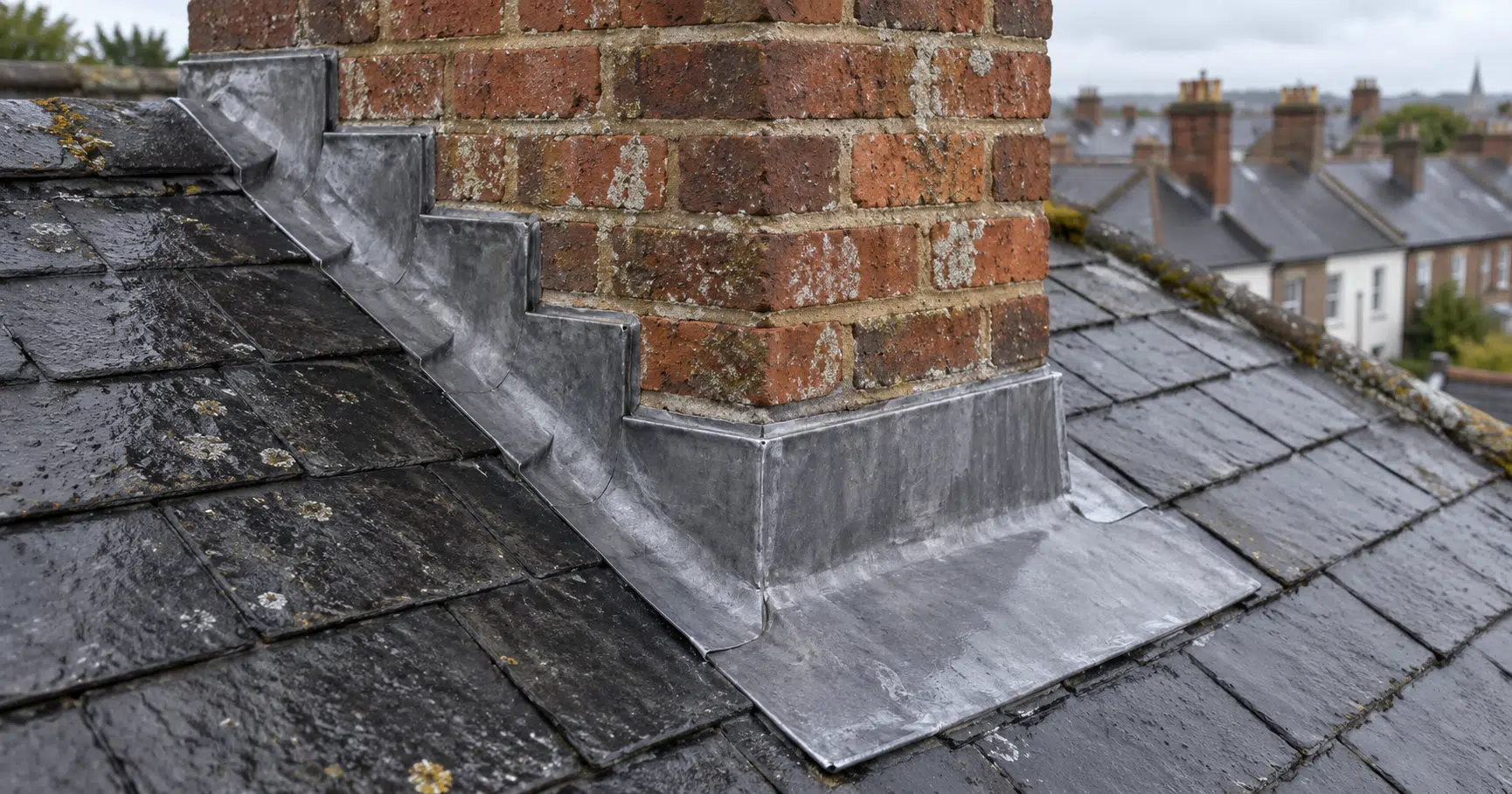
Dry Ridge vs Mortar Ridge Tiles: Which Is Better for Irish Roofs?
After every big storm that rolls in off the Atlantic, the same job fills our diary: loose ridge tiles. They're the row of tiles running along the very top of the roof, and on most older Dublin homes they're held in place by nothing more than a bed of sand and cement mortar. When that mortar cracks, the ridge tiles start to rock, water gets in at the highest point of the roof, and in a strong gale they can come off altogether. Which raises a fair question for anyone replacing or repairing a ridge: stick with mortar, or switch to a dry ridge system?

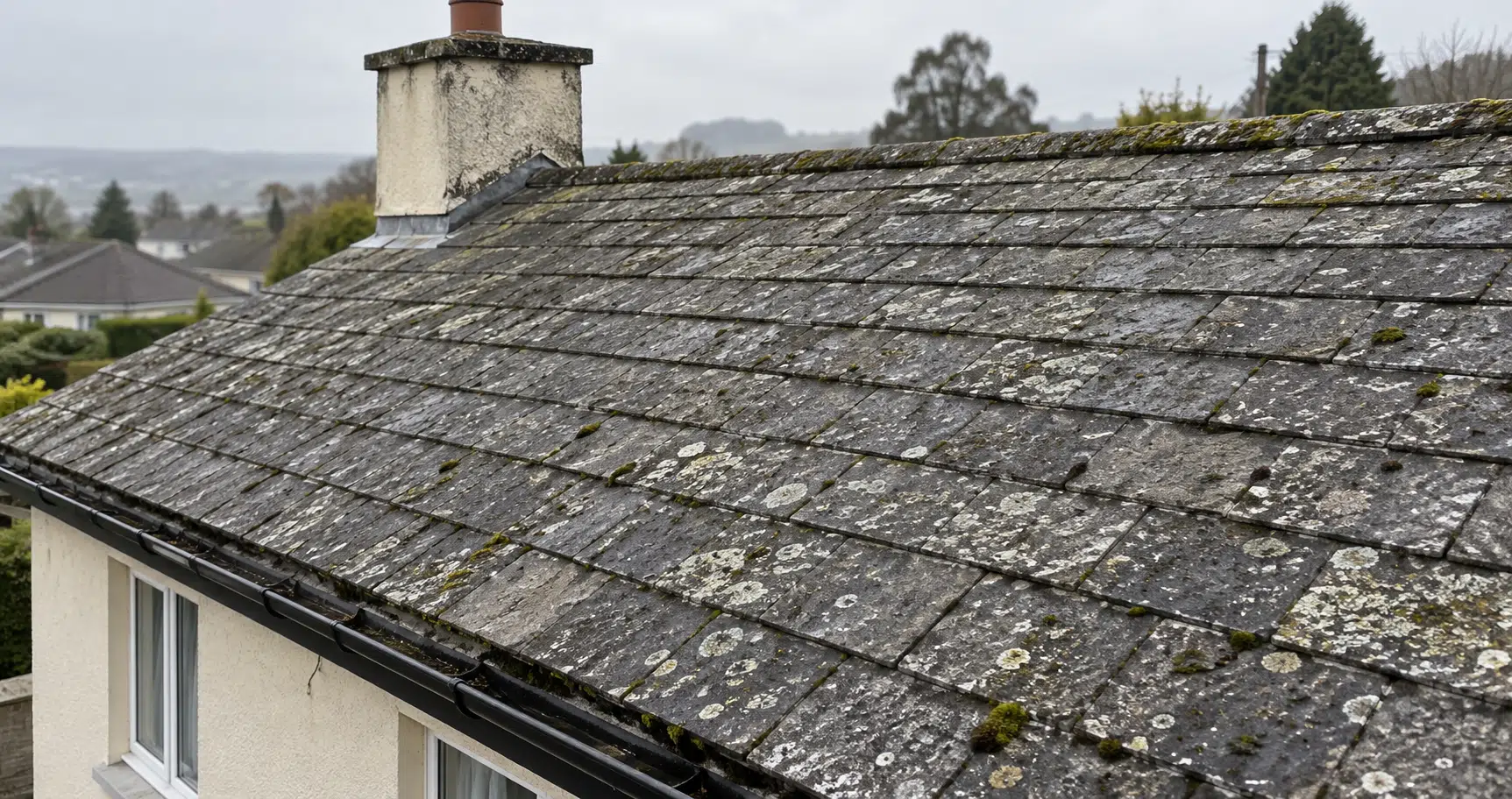
Cracked ridge mortar is one of the most common storm-related problems on Dublin roofs.
Both methods have their place, but they behave very differently in Irish weather. This guide explains how mortar ridge tiles and dry ridge systems work, why mortar so often fails, what the current standards say, and how to decide which is right for your roof.
Key Takeaways
- Ridge tiles seal the highest, most exposed line on your roof, so when they fail, water has the whole roof to run down.
- Mortar ridge tiles crack over time as the roof moves and Irish freeze-thaw weather works on the joints.
- A dry ridge system fixes each tile mechanically with screws or clips, with no mortar to crack or wash out.
- Current practice calls for ridge tiles to be mechanically fixed, so mortar alone is no longer considered enough.
- Mortar still has a place on period and conservation homes, as long as the tiles are mechanically fixed as well.
What Are Ridge Tiles and Why Do They Matter?
Where two slopes of a pitched roof meet at the top, there's a gap that the main tiles or slates can't cover. Ridge tiles cap that gap. The same goes for hip tiles, which run down the sloping corners of a hipped roof. Because they sit at the highest and most exposed point of the house, ridge tiles take the full force of the wind and rain, and any weakness there tends to show up quickly as a leak in the attic or a stain on an upstairs ceiling.
Mortar Bedded Ridge Tiles: The Traditional Way
How It Works
For generations, ridge tiles in Ireland were simply bedded on a thick line of sand and cement mortar laid along the ridge, with mortar pointed into the joints between each tile. The weight of the tile and the grip of the mortar held everything in place. It looks neat and traditional, it's what most older Dublin houses have, and when it's freshly done it works well.
Why Mortar Fails in Irish Weather
The problem is that mortar is rigid, and roofs aren't. Timbers expand and contract with the seasons, and the whole roof moves slightly in high winds. Mortar can't flex with that movement, so over the years hairline cracks open up along the bedding and the joints. Rain then gets into those cracks, and in a cold snap the water freezes, expands and widens them further. Our climate is close to perfect for this kind of damage, with frequent rain and regular freeze-thaw cycles through the winter, as Met Éireann's climate data shows.
Eventually pieces of mortar wash or fall out, the ridge tiles lose their grip and start to rock, and at that point it only takes one strong gust to lift them. A ridge tile coming off a two-storey house is a genuine hazard to anyone below, as well as an open invitation for water.
What Is a Dry Ridge System?
A dry ridge system does away with mortar entirely. Instead of relying on a bed of cement to hold the ridge tiles, each tile is screwed or clipped mechanically to a timber ridge batten fixed along the top of the roof. Underneath sits a flexible ridge roll, a strip of weatherproof material that seals the gap between the ridge and the roof tiles either side. Union pieces or seals cover the joints between neighbouring ridge tiles, and end caps finish off the ends.
The Ventilation Bonus
Many dry ridge systems are vented, letting air escape from the roof space along the ridge while keeping rain out. That's a real advantage in Irish homes, where poor roof ventilation is a common cause of damp in the loft, something we covered in our guide to attic condensation in Irish homes. A mortar ridge, by contrast, seals the top of the roof completely.
Dry Ridge vs Mortar Ridge: Side by Side
| Mortar bedded ridge | Dry ridge system | |
|---|---|---|
| How tiles are held | Mortar bed, ideally with mechanical fixings too | Screws or clips into a ridge batten |
| Maintenance | Repointing and eventually rebedding | Very little, no mortar to crack |
| Storm resistance | Weakens as the mortar ages | Each tile individually secured |
| Roof ventilation | None, the ridge is sealed | Many systems are vented |
| Weather for installation | Mortar can't be laid in frost or heavy rain | Can be fitted in most conditions |
| Appearance | Traditional, suits period homes | Neat and modern, joints covered by seals |
| Upfront cost | Usually lower | Usually a little higher |
The Standards Have Moved On
This isn't just a roofer's preference. Since the 2014 revision of BS 5534, the code of practice for slating and tiling that many roofers and manufacturers here work to, ridge and hip tiles should be mechanically fixed, and mortar alone is no longer treated as an adequate fixing. Building control body LABC summarised the change when it came in. That doesn't mean mortar is banned, but it does mean a properly done mortar ridge today should have mechanical fixings as well. On a new roof or a full ridge replacement, a dry ridge system is the simplest way to meet that standard.
When Mortar Still Makes Sense
A dry ridge system isn't automatically the right answer for every house. Mortar is still the better choice in a few situations:
- Period and protected homes, where a traditional bedded ridge is part of the character of the building.
- Architectural Conservation Areas, where changes to the look of the roof may need to be agreed with the local authority.
- Terraced or semi-detached rows, where you want the ridge to match the neighbouring houses.
- A small, localised repair on an otherwise sound mortar ridge, where rebedding a couple of tiles is the sensible fix.
In those cases, the right approach is a quality mortar mix combined with mechanical fixings, so you keep the traditional look without relying on mortar alone to hold the tiles down.
Signs Your Ridge Tiles Need Attention
You can spot most ridge problems from the ground, ideally with a pair of binoculars. Look out for:
- Cracked or missing mortar along the ridge or between the tiles.
- Gaps where you can see daylight under the ridge tiles from inside the attic.
- Ridge tiles that look out of line or have shifted after a storm.
- Lumps of mortar in the gutters or on the ground near the house.
- Damp patches on an upstairs ceiling near the centre line of the house.
Please don't go up to check. Ridge tiles are at the most dangerous height on the roof, and the Health and Safety Authority's guidance on working at height is a good reminder of why roof work is best left to people with the right equipment.

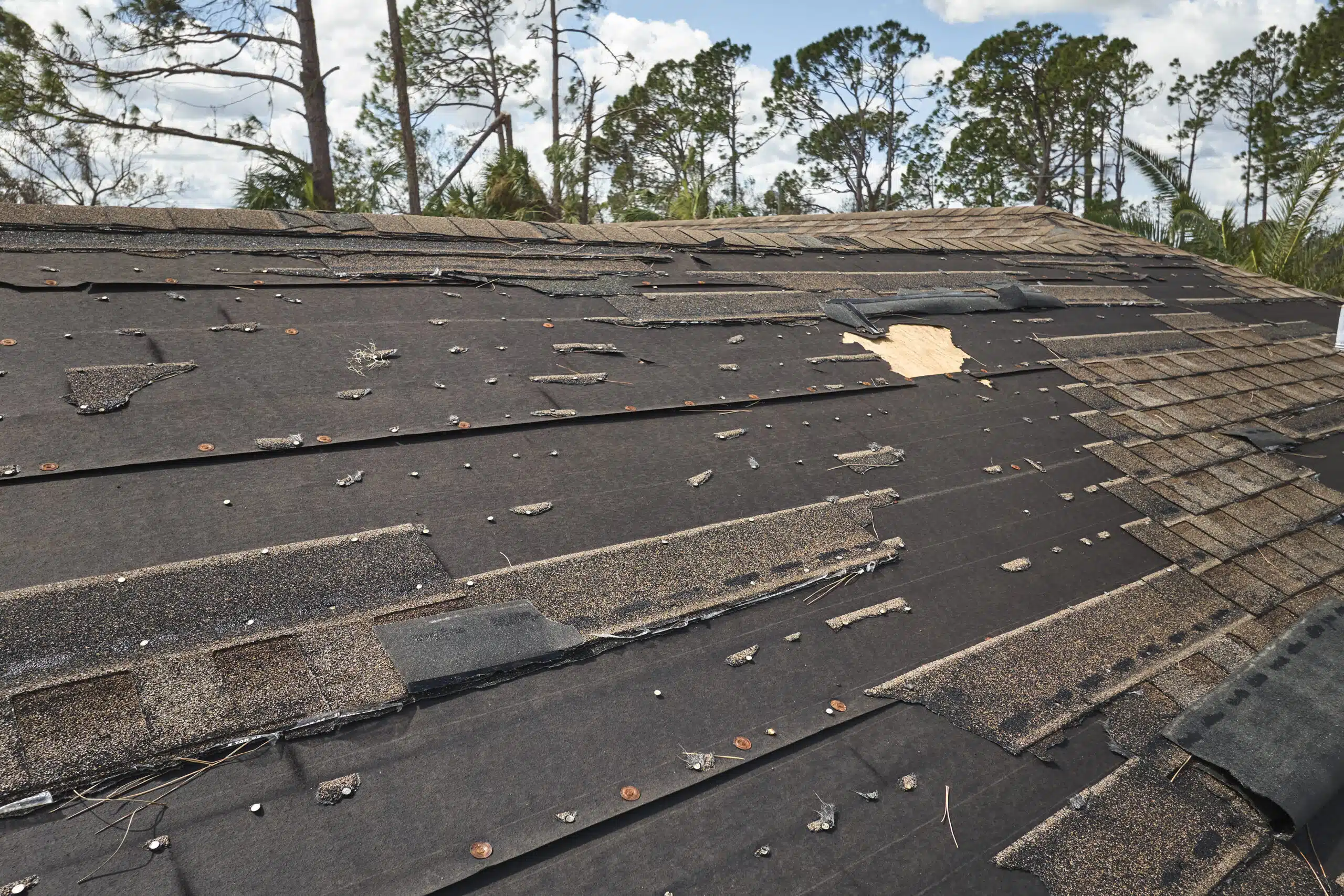
With a dry ridge system, each ridge tile is screwed down individually, with no mortar to crack.
Repoint, Rebed or Switch to a Dry Ridge?
When your ridge needs work, there are three routes, depending on how far gone it is.
Repointing
If the mortar bed is mostly sound and only the joints have cracked, raking out and repointing the joints can buy you some more years. It's the quickest and cheapest ridge tile repair, but it doesn't address the bedding underneath, so it's a stopgap rather than a long-term fix.
Rebedding
If the tiles are loose or the bed itself is crumbling, the ridge tiles need to come off, the old mortar cleaned away and the tiles rebedded on fresh mortar, ideally with mechanical fixings added. This is the right option where you want to keep a traditional look.
Converting to a Dry Ridge System
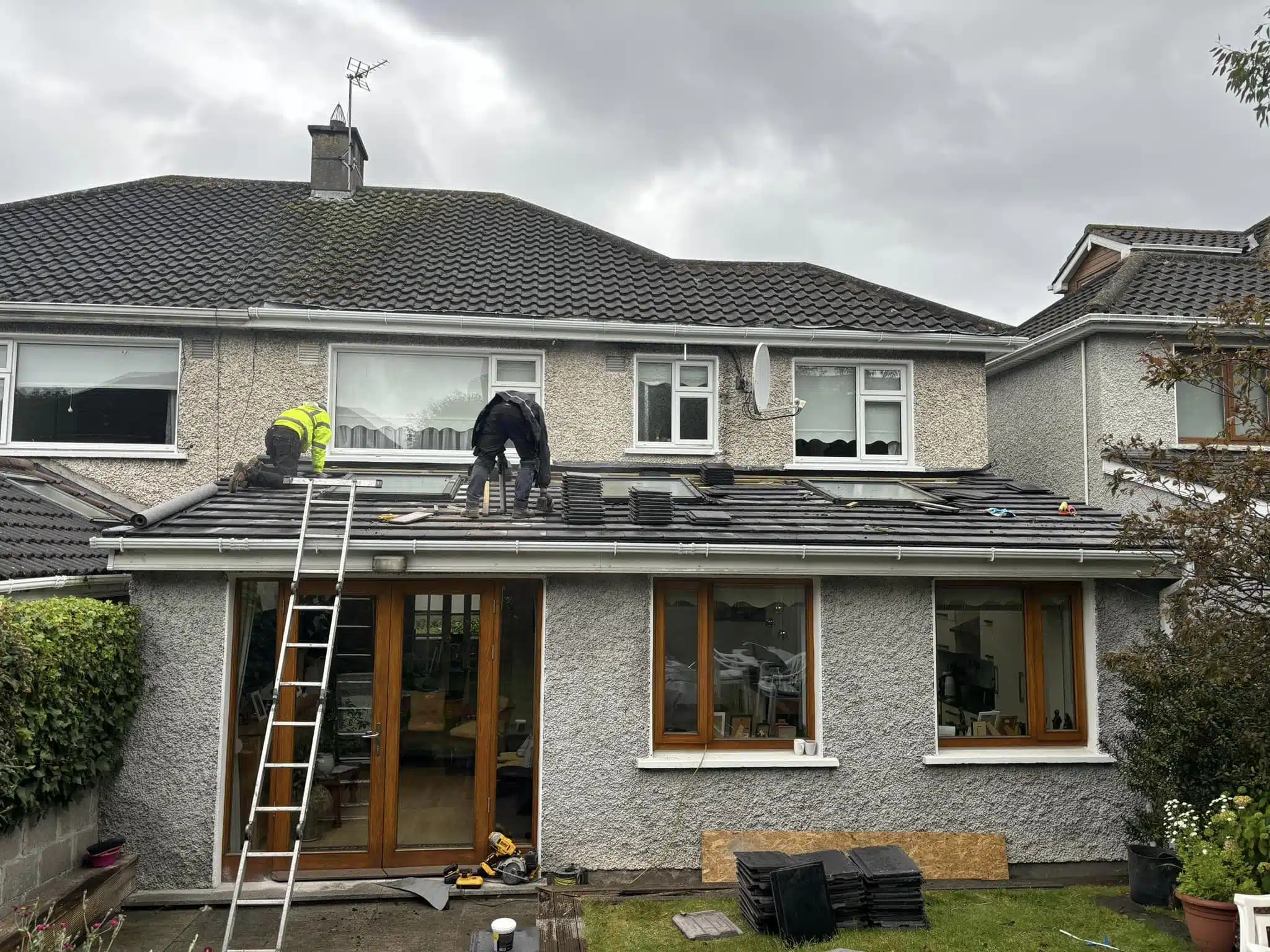
On most roofs, the ridge can be converted to a dry ridge system without touching the rest of the roof. The old tiles and mortar come off, a ridge batten and ridge roll go on, and the tiles (or new matching ones) are screwed back down. For an exposed house that keeps losing ridge tiles in storms, this is usually the fix that stops the problem for good. Our tile and slate replacement team handles ridge repairs and dry ridge conversions across Dublin, and if you're not sure what state your ridge is in, a roof inspection will tell you which option makes sense.
If tiles have already come loose or blown off, don't wait for a dry spell. An open ridge lets water straight into the roof, and our emergency roof repair team can make it safe and watertight quickly. Storm damage may also be covered by your home insurance, and Citizens Information has a clear overview of how that generally works.
Loose or cracked ridge tiles on your roof?
We'll tell you honestly whether it needs repointing, rebedding or a dry ridge system, and give you a clear, no-obligation price.
Get a Free QuoteFrequently Asked Questions
Is a dry ridge system better than mortar?
For most modern Irish homes, yes. A dry ridge system fixes each tile mechanically, needs very little maintenance, often ventilates the roof space and doesn't crack the way mortar does. Mortar is still the better choice on some period or protected homes where the traditional look matters, but it should be combined with mechanical fixings rather than relied on alone.
How long does ridge tile mortar last?
It varies a lot with exposure and the quality of the original work. On a sheltered roof, a good mortar ridge can last many years before it needs attention, while on an exposed or coastal house cracking can show much sooner. Rather than counting years, it's better to watch for cracked or missing mortar and tiles that have moved.
Can you convert an existing mortar ridge to a dry ridge system?
Yes, on most roofs. The old ridge tiles and mortar are removed, a ridge batten and flexible ridge roll are fitted, and the tiles are screwed back on, either the originals if they're in good condition or new matching ones. The rest of the roof usually isn't affected.
Are loose ridge tiles dangerous?
They can be. A loose ridge tile lets water into the roof at its highest point, and in a strong wind it can come off completely and fall from height. If you can see tiles that have shifted or lifted, especially after a storm, it's worth getting them made safe quickly rather than waiting.
How much does ridge tile repair cost in Dublin?
It depends on the length of the ridge, how easy the roof is to access, and whether it needs repointing, rebedding or a full dry ridge conversion. Because every roof is different, the only accurate way to know is to have it looked at. We're happy to assess it and give you a clear, no-obligation quote.