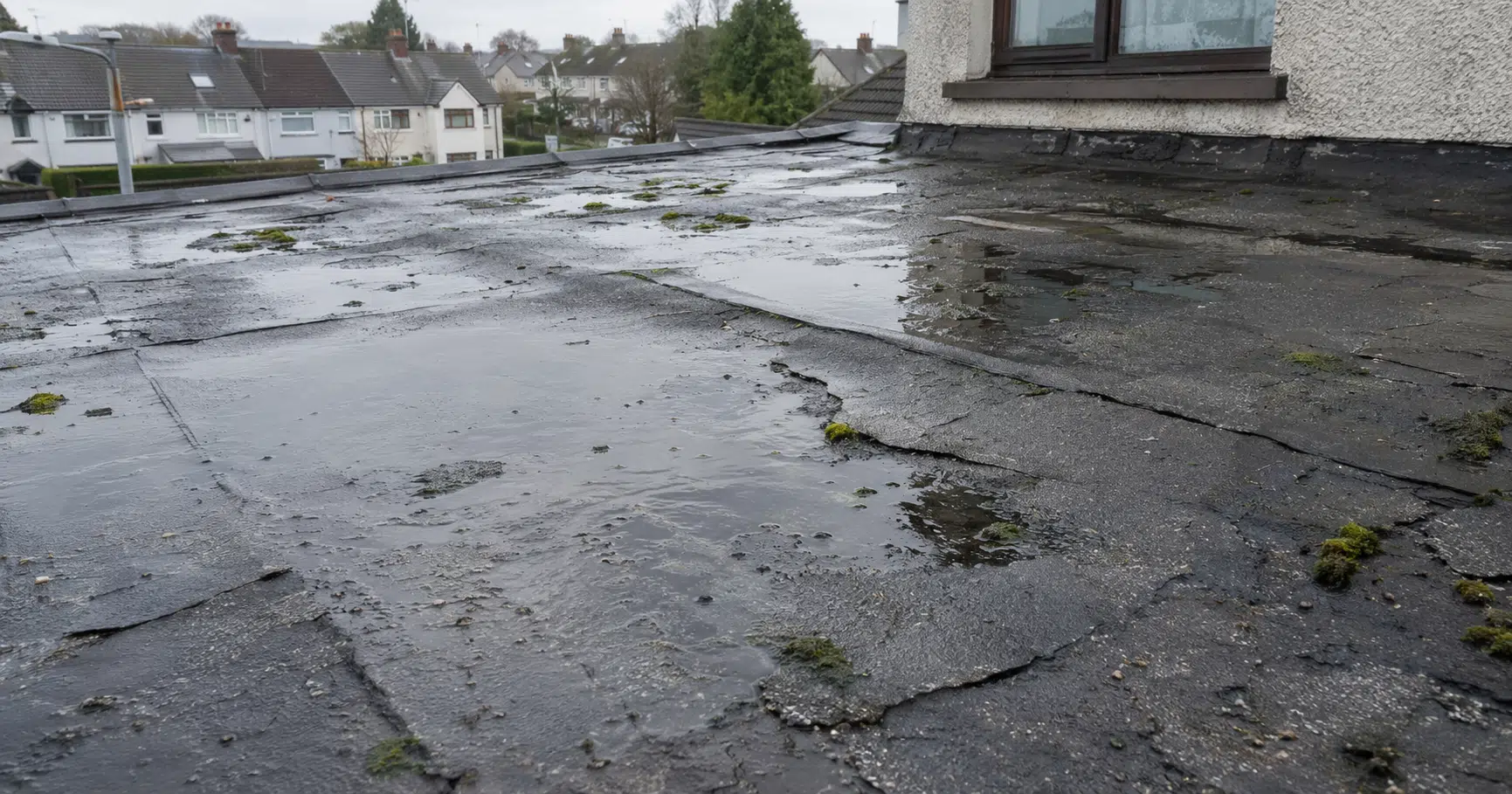
Attic Condensation in Irish Homes: Why It Happens and How to Stop It
You climb into the attic on a cold morning to grab something from storage, and the torch catches it: beads of water on the underside of the roof, dark patches of mould creeping across the rafters, and insulation that feels damp to the touch. The natural assumption is that the roof is leaking. But very often, especially in the depths of an Irish winter, it isn't a leak at all. It's condensation, and it's one of the most misunderstood problems we get called out to.
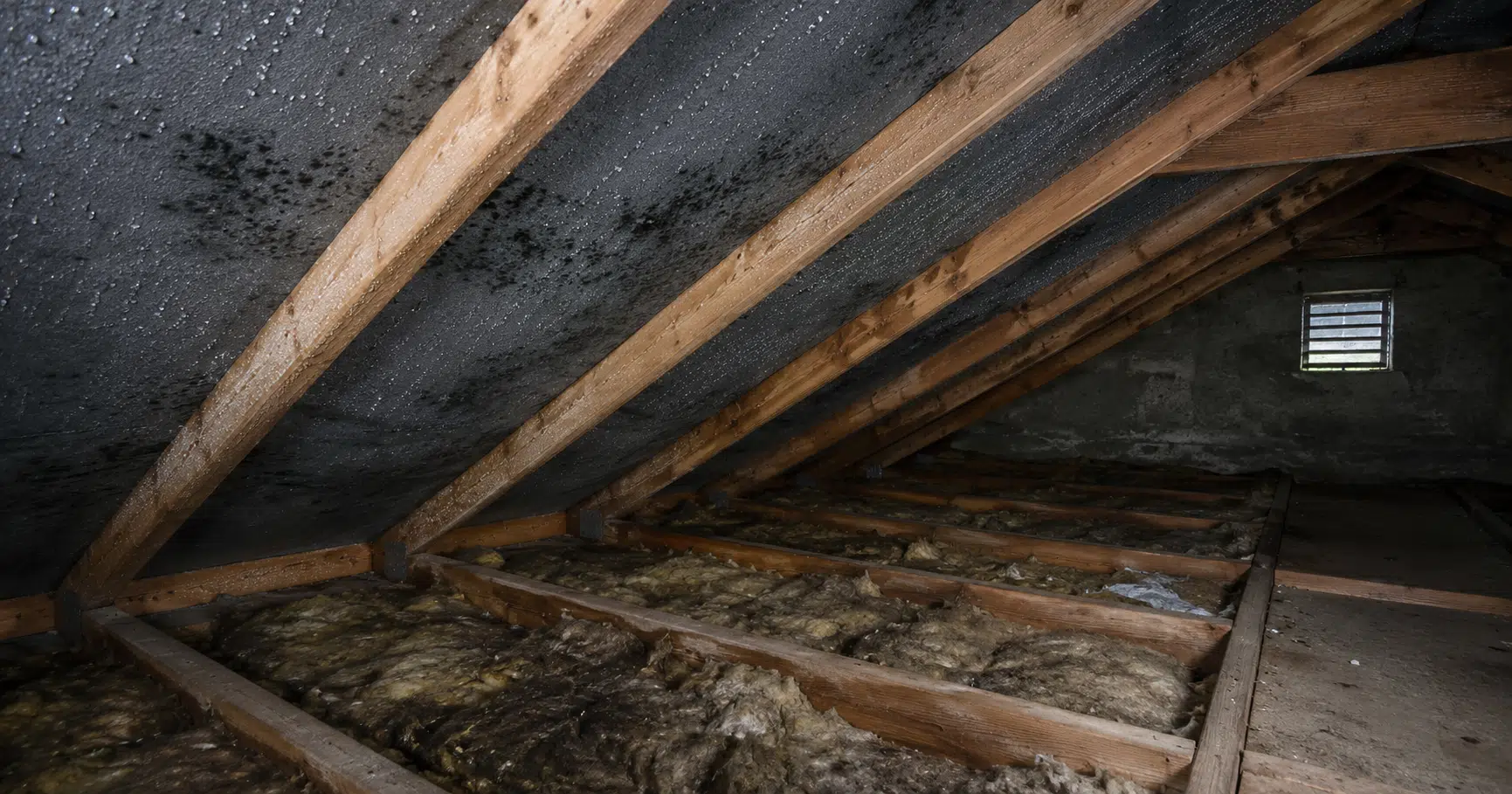
Damp timbers and mould in the attic are often mistaken for a leak, but the cause is usually condensation.
The good news is that condensation is almost always fixable, and usually without major work. The key is understanding why it happens, so you treat the cause rather than chasing a leak that was never there. Left alone, though, attic condensation quietly rots timbers and ruins insulation, so it's well worth sorting.
Key Takeaways
- Condensation forms when warm, moist air meets cold surfaces, in this case the cold underside of your roof and the roof timbers.
- It's often mistaken for a roof leak, but it's worst in cold, dry weather rather than during rain.
- Poor attic ventilation is the usual root cause, often blocked or missing soffit vents that stop the roof space breathing.
- Everyday moisture makes it worse, from showers and cooking to drying clothes indoors and fans that vent into the attic.
- Left unchecked it leads to rot, mould and ruined insulation, so it's worth stopping early.
What Is Attic Condensation, Really?
The physics is simple. Warm air holds more moisture than cold air. Every day your home produces a lot of water vapour, from cooking, showering, drying clothes and simply breathing, and that warm, damp air rises. If it makes its way up into a cold attic and meets the cold underside of the roof, it cools suddenly and can no longer hold all that moisture, so the water condenses out as droplets on the timbers and felt. It's the same thing that happens on a cold window in winter, just hidden away in the roof space where you don't see it until damage is done.
Why Irish Homes Are Especially Prone
A few things about Irish homes and our climate make attic condensation particularly common. Our air is damp and our winters bring long, cold spells, which is the exact combination that drives condensation. On top of that, the way we live and upgrade our homes often makes it worse without anyone realising:
- Better ceiling insulation makes attics colder. Upgrading loft insulation keeps heat in the house, which is great, but it also leaves the attic above colder than before, so surfaces up there are more likely to hit the point where moisture condenses.
- We dry a lot of washing indoors. In a wet climate, clothes often get dried on radiators or airers, pumping large amounts of moisture into the house that eventually finds its way up.
- Fans and dryers sometimes vent into the roof. Bathroom extractor fans and tumble dryers that discharge into the attic instead of outside dump warm, wet air exactly where you don't want it.
- Ventilation gets blocked. Soffit vents that are painted over, clogged or buried under insulation stop the roof space breathing, so moist air has no way out.
- Older non-breathable felt traps moisture. Many older roofs have a traditional bitumen felt underlay that doesn't let vapour escape, unlike modern breathable membranes.
The Warning Signs of Attic Condensation
Because it happens out of sight, condensation is often well advanced before it's spotted. These are the signs to look for on a cold-weather trip into the loft:
- Water droplets or a wet sheen on the underside of the roofing felt or membrane.
- Black mould spreading across the rafters and the underside of the roof.
- Damp, matted insulation that has lost its fluffiness and feels heavy.
- A musty, damp smell in the attic or in the rooms just below it.
- Stains on the ceiling below, which is why it's so often mistaken for a leak.
- Drips that appear in cold snaps rather than during rain, sometimes called "phantom leaks".
Condensation or a Leak? How to Tell the Difference
This is the question that matters most, because the fixes are completely different. Chase a leak that isn't there and you'll spend money achieving nothing. Here's how the two typically differ:
| Clue | Condensation | A roof leak |
|---|---|---|
| When it's worst | Cold, dry weather and after cold snaps | During or just after rain |
| Where it shows | Widespread across timbers and felt | Localised, traceable to one spot |
| The pattern | General dampness and mould on rafters | A defined damp path from a defect |
| Underside of the felt | Fine beads of water over a wide area | A wet streak from a single entry point |
| Main season | Mostly winter | Any time it rains |
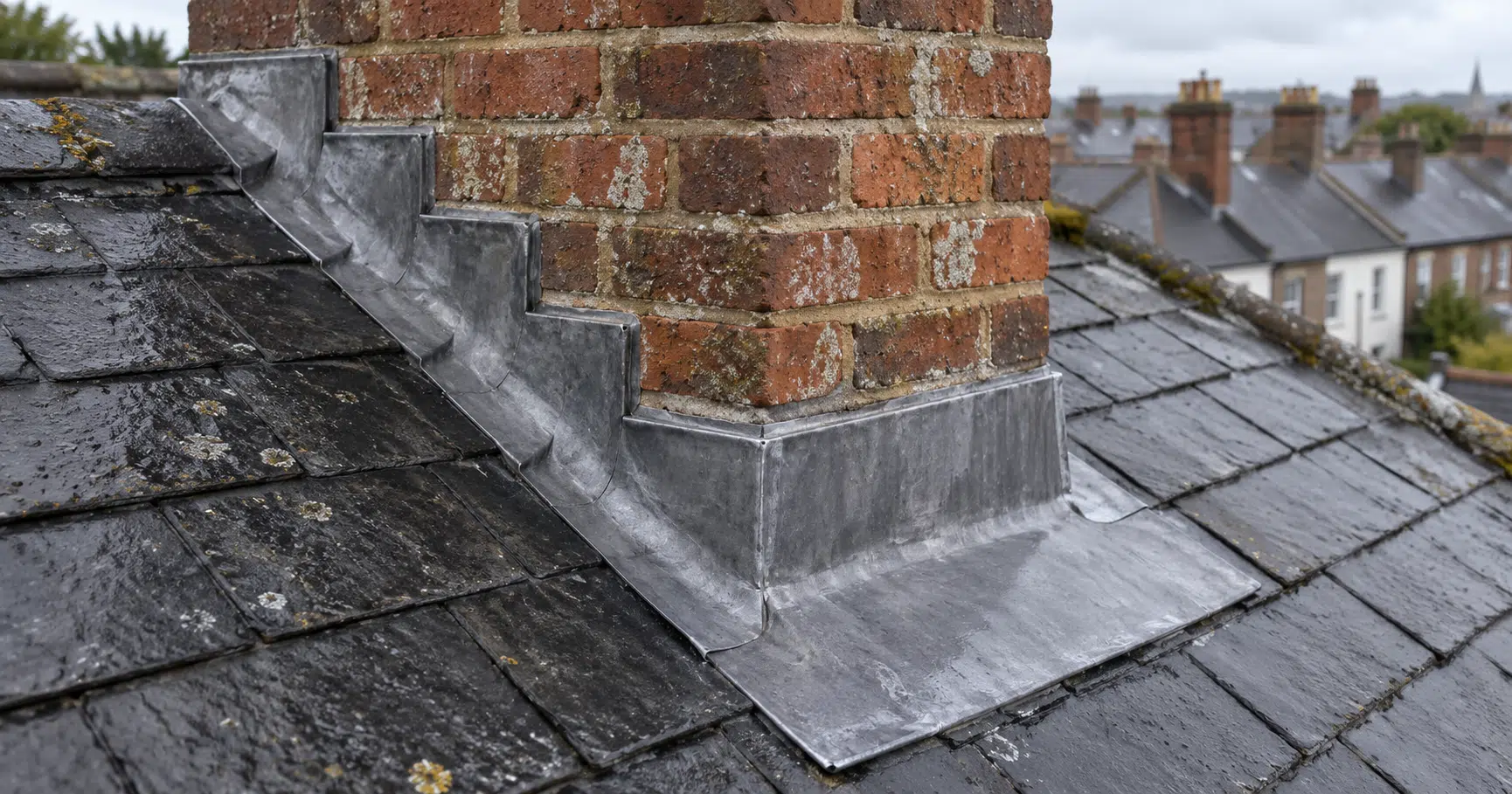
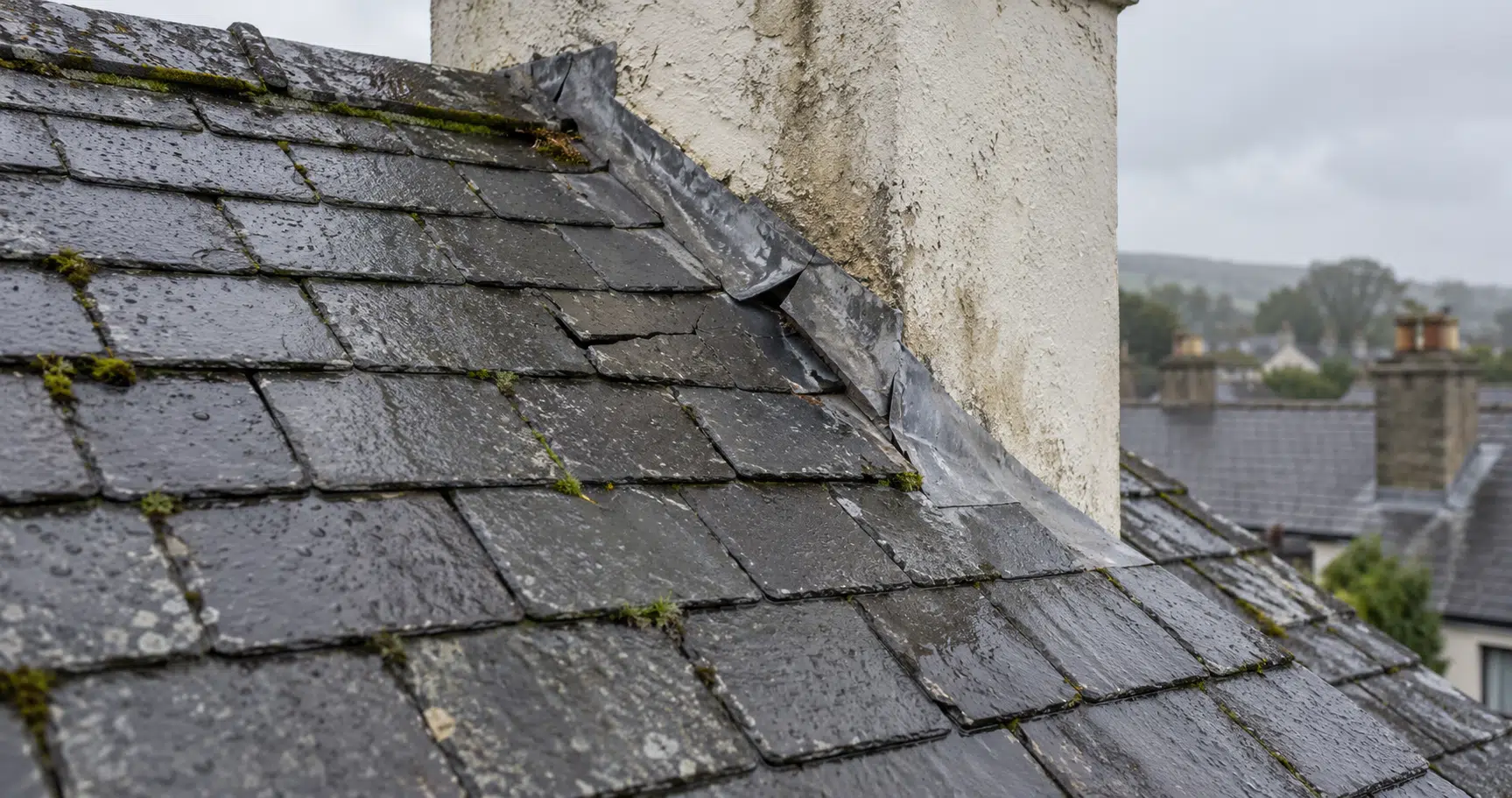
If you genuinely can't tell, it's worth getting it looked at rather than guessing. A professional roof inspection will confirm whether you're dealing with condensation or an actual leak. Real leaks often trace back to worn flashing around chimneys and vents or to slipped or cracked tiles, both of which show a defined water path rather than the general dampness that condensation causes.
Widespread mould across the rafters, rather than one damp patch, usually points to condensation.
How to Stop Attic Condensation
Fixing condensation comes down to two things: getting more moist air out of the roof space, and letting less of it in. Here's how, in the order we'd tackle it.
Improve the Ventilation
This is the single most important fix. A roof space needs air moving through it to carry moisture away, and that usually means clear soffit vents at the eaves, sometimes paired with ridge or tile vents higher up so air can flow right through. If your soffit vents are blocked, painted over or missing, sorting them is often all it takes to solve the problem.
Stop Moist Air Getting In
Just as important is stopping household moisture reaching the attic in the first place. Make sure bathroom and kitchen extractor fans and any tumble dryer vent to the outside, never into the roof space. Seal around the loft hatch, and close up gaps where pipes and cables pass through the ceiling, as these are the routes warm, damp air uses to sneak upstairs.
Keep the Eaves Clear
When loft insulation is pushed right into the eaves, it blocks the airflow coming in from the soffit vents. Leaving a ventilation gap at the eaves, or fitting simple rafter trays, keeps that air path open so the attic can breathe.
Reduce Moisture in the Home
Small habits help too: use extractor fans when cooking and showering, open a window to let steam out, and dry washing outside or in a vented space rather than on radiators where you can. Balancing insulation with proper ventilation is key, and SEAI's guidance on ventilation is a good place to read up on getting that balance right.
What Happens If You Ignore It
Condensation might seem like a minor nuisance, but over a few winters it does real damage. Persistent damp rots the roof timbers, and once structural timber softens you're into far more serious and expensive repairs. It ruins loft insulation, which then stops doing its job and pushes your heating bills up. And the mould it feeds isn't just unsightly, damp and mould in the home are linked to respiratory problems, as the NHS guidance on damp and mould makes clear.
Damp attic, mould on the rafters, or not sure if it's condensation or a leak?
We'll take a proper look, tell you exactly what's causing it, and sort the ventilation or the leak, with a clear, no-obligation price.
Get a Free QuoteFrequently Asked Questions
Is attic condensation a serious problem?
It can be if it's left. In the short term it's mostly a nuisance, but over a few winters the constant damp rots roof timbers, ruins insulation and feeds mould that can affect health. The upside is that it's usually straightforward and inexpensive to fix once the cause is identified, so it's well worth dealing with early.
How do I know if it's condensation or a leak?
The biggest tell is timing. Condensation is worst in cold, dry weather and shows up as fine droplets and mould spread widely across the timbers. A leak is worst during or just after rain and traces back to one specific spot. If you can't be sure, it's worth having it inspected, as the fixes for each are completely different.
Does adding more insulation cause attic condensation?
It can contribute to it. Extra loft insulation keeps heat in your home, which leaves the attic above colder and more prone to condensation, and if insulation is stuffed into the eaves it can block ventilation too. Insulation isn't the enemy, it just needs to be paired with proper attic ventilation so the roof space can still breathe.
Should my bathroom fan vent into the attic?
No, never. A bathroom extractor fan or tumble dryer that discharges into the roof space is dumping warm, moist air exactly where it will condense. These should always vent to the outside. It's one of the most common causes of attic condensation we come across, and one of the easiest to put right.
Can I fix attic condensation myself?
Some of it, yes. Clearing soffit vents, keeping insulation out of the eaves, sealing the loft hatch and reducing moisture in the home are all things a handy homeowner can tackle. If the ventilation needs improving properly, or if condensation has already caused mould or timber damage, it's worth getting a professional to assess it and put a lasting fix in place.